
By: Whova Team | Last Updated: September 30, 2026

Need event management software that manages both abstracts and CME credits?
Emailed abstracts and paper sign-in sheets leave confidential research papers in open inboxes and physicians waiting weeks for credit. Meanwhile, the treasurer tracks workshop fees in yet another spreadsheet.
Event management software for healthcare brings multi-item registration, abstract peer review, session check-in and CEU certificates into one dashboard. Attendees scan into sessions from their phones, and you can see who qualifies for credit.
If you are searching for the best event management software for healthcare in 2026, here is your complete comparative guide.
Key Takeaways
- Healthcare events need software that runs blind peer review for research abstracts and issues CEU certificates from session check-ins.
- Before you buy, check that the quote includes badge printing and lead retrieval, and that volunteers can set up the event without technical help.
- Onomi by SpotMe suits pharma HCP meetings and Cadmium suits on-demand education, but if you want one platform that covers all of this and more for your medical conference, choose Whova.
Healthcare Event Management Software Comparison Table
What Is Event Management Software for Healthcare?
Event management software for healthcare is a platform that runs the administrative side of a medical conference or CME workshop, including registration, abstract review, session attendance and continuing education certificates.
The ACCME requires accredited CME providers to record physician participation and keep those records for six years after each activity. Planners and faculty must also disclose their financial relationships with ineligible companies before the activity begins.
Committees that piece this together with generic registration pages and spreadsheets end up reconciling attendance by hand. For a CME coordinator, or a physician organizing the annual meeting between clinic shifts, that means evenings lost to data entry. And one missing record can cost an attendee the credit they traveled for, or become a problem when the provider’s accreditation comes up for review.
Specialized software connects these steps. Attendees scan into each session from their phones, and the platform issues certificates to everyone who meets the attendance and survey criteria. The same system stores abstract scores and prints badges at check-in, so the committee works from a single record from registration through to certification.
Why Do Healthcare Association Members Need Dedicated Event Software?
Those who plan a healthcare congress usually do it on top of a full-time job. A clinical committee chair may review abstracts between hospital rounds, and a medical society board often relies on residents and member volunteers to staff the registration desk on event day.
Software that takes days of training to learn works against that team. Check-in lines back up while volunteers search for names, and paper evaluation forms go missing between session rooms before anyone can log them for credit.
Purpose-built healthcare event technology takes that repetitive work off the committee. Registration data carries straight through to attendee check-in, and the credit and review workflows run on rules the committee sets beforehand.
How Does Software Handle Complex Registration and Attendee Management?
A medical conference registers several kinds of participants at once. Members and non-members pay different rates, and exhibitors need staff registration with their own set of questions.
Event registration software lets the organizer build a separate registration flow for each group and restrict member pricing to people the association’s AMS has verified. Every registration feeds straight into the attendee check-in system, so the badge that prints at the desk shows the correct name and ticket type.
How Does Software Simplify Continuing Education (CEU/CME) Credit Tracking?
Integrated CEU tracking moves credit administration into the event app. Attendees check in by scanning a QR code posted outside each session room. The organizer decides which sessions count toward credit and which feedback surveys each attendee has to complete. The platform then generates a personalized certificate for every attendee who meets those criteria.
How Does Software Streamline Scientific Abstracts and Poster Presentations?
Abstract management software collects research submissions through one online portal and assigns each paper to reviewers by topic. Reviewers score submissions against the committee’s criteria in single or double-blind peer review, and accepted abstracts convert straight into sessions on the agenda. Some platforms also collect speaker disclosure forms with each submission.
During the conference, an online Artifact Center works as a digital poster hall. Presenters upload their posters as PDFs or recorded videos, and attendees browse them in the event app.
How Does Software Ensure Data Privacy and Security Standards?
A medical conference collects attendee contact and payment details alongside unpublished research that authors expect the committee to keep confidential.
SOC 2 Type II compliance gives organizers a way to check how a vendor protects that data. In a SOC 2 examination, an independent auditor reviews the vendor’s security and privacy controls, and a Type II report confirms those controls worked over a period of several months. So a platform with a current SOC 2 Type II report has independent proof that it keeps attendee records and unpublished abstracts secure, and you can ask for that report during vendor selection.
How Should Non-Technical Healthcare Organizers Compare Event Software Before Buying?
Two quotes can look almost identical until the vendor adds badge printing and exhibitor lead retrieval to the invoice. And a committee that finds those extra fees on conference morning has no time left to switch vendors.
A medical healthcare association can prevent that surprise by checking two things before signing the contract. The first is the total cost of ownership, and the second is how quickly volunteer staff can learn the system.
What Total Ownership Costs Should You Watch For (Licensing, Badges, and Processing Fees)?
Vendors charge either per event or through an annual license. A per-event plan suits an association with one annual meeting. A society running several CME workshops a year may save with an annual license covering unlimited events.
The license covers only part of the total. Name badge printing and exhibitor lead retrieval can each appear as a separate line item on the quote. And ticketing platforms often add a service fee on every ticket purchase, on top of card processing.
The registration system should also itemize workshop and meal add-ons, so the treasurer can match each fee to the budget.
How Fast Can Volunteer Committee Members Set Up the Software?
Healthcare events and clinical symposia often use the help of volunteers, so the setup has to be intuitive. Look for platforms with pre-built event pages, a drag-and-drop agenda builder and automated email tools. With those in place, a committee member can launch the event without any technical expertise.
What Are the Best Event Management Platforms for Healthcare in 2026?
1. Whova
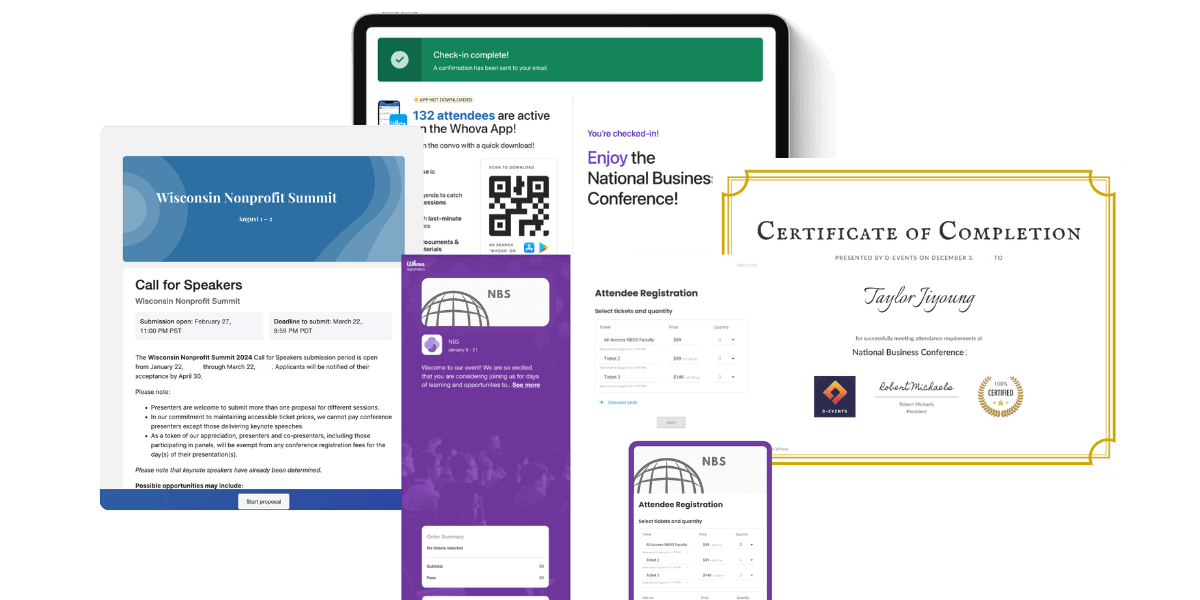
Quick Verdict: Whova is a top-rated, all-in-one event management software that simplifies registration, abstract peer review, CEU credit delivery, and onsite check-in for healthcare events.
Best For: Medical associations, clinical symposia, CME conferences, and healthcare congresses seeking organized workflow from registration to check-in with an accessible setup.
Key Healthcare Features:
- Flexible Registration: Track ticket sales alongside add-on costs like meals, workshop fees, or exclusive experiences.
- Abstract Management: Manage research submissions, assign reviewers for blind peer review, use grading rubrics, build agendas, and send automated notification emails. Centralize all your speaker proposals and pool waitlisted speakers for canceled speakers or extra opened slots.
- Automated CEU Tracking & Certification: Track session check-ins with fast mobile scans, require completion surveys, and deliver instant personalized CEU certificates.
- SOC 2 Type II Compliance: Verified enterprise security keeps attendee data and research documents protected.
- Onsite Check-in & Badge Printing: Print attendee name badges on demand upon arrival to keep entry lines moving.
- Lead Retrieval & Artifact Center: Allow exhibitors to scan contact details quickly, and display slides or posters online in a digital Artifact Center.
- 1-1 Meeting Scheduler: Coordinate private, 1:1 meetings between healthcare professionals, key leaders, or exhibiting companies.
Pros: Highly intuitive for non-technical organizers, seamless integration from registration to post-event reporting, award-winning mobile app experience for organizers and attendees.
Cons: Focuses on standardized, highly functional page layouts rather than fully customizable code layouts.
Pricing: Custom quote per event.
Healthcare events that used Whova:
- Society of Robotic Surgery Annual Meeting
- thINc360 – The Healthcare Innovation Congress
- UCSF-Stanford CERSI Innovations in Regulatory Science Summit
2. X-CD Technologies
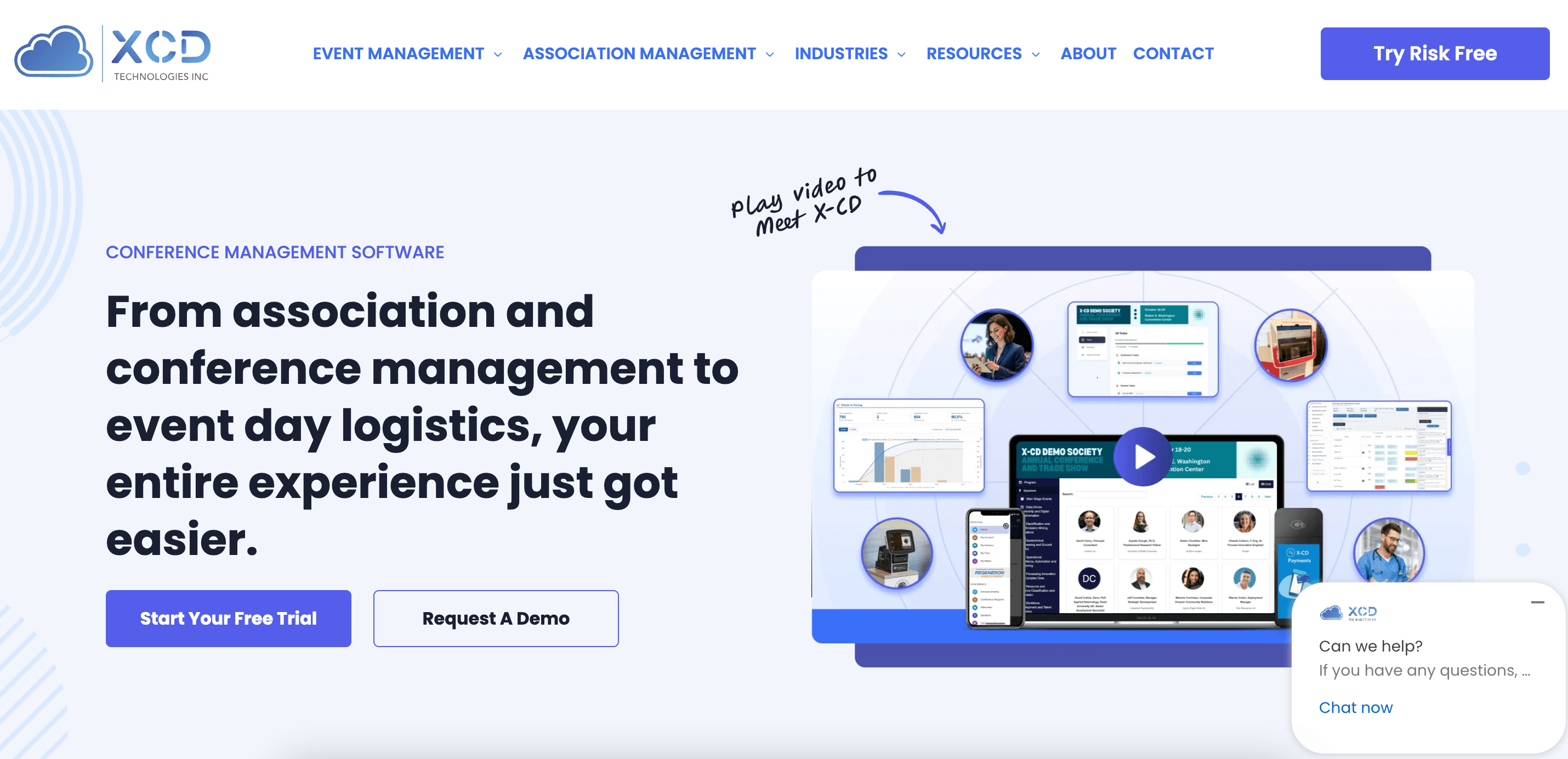
Image credit to X-CD Technologies
Quick Verdict: X-CD Technologies provides cloud-based conference management for medical societies that run complex scientific programs.
Best For: Medical associations that need CME credit history tied to member records.
Key Healthcare Features:
- CME history tracking: Links CME events, member data and credit history in one platform, where attendees can access their certificates and transcripts once they complete the requirements.
- Speaker disclosure forms: Collects conflict-of-interest disclosures from speakers, co-authors, moderators and session chairs.
- Conference proceedings: Outputs session, speaker and presentation data as digital, flash drive or printed proceedings.
- Event mobile app: Gives attendees a conference app for iPhone, iPad and Android.
Pros: Designed around the workflows of scientific and medical associations.
Cons: The wide feature set means a lot of buttons and processes for new users to learn.
Pricing: Custom quote based on selected modules.
3. Onomi by SpotMe
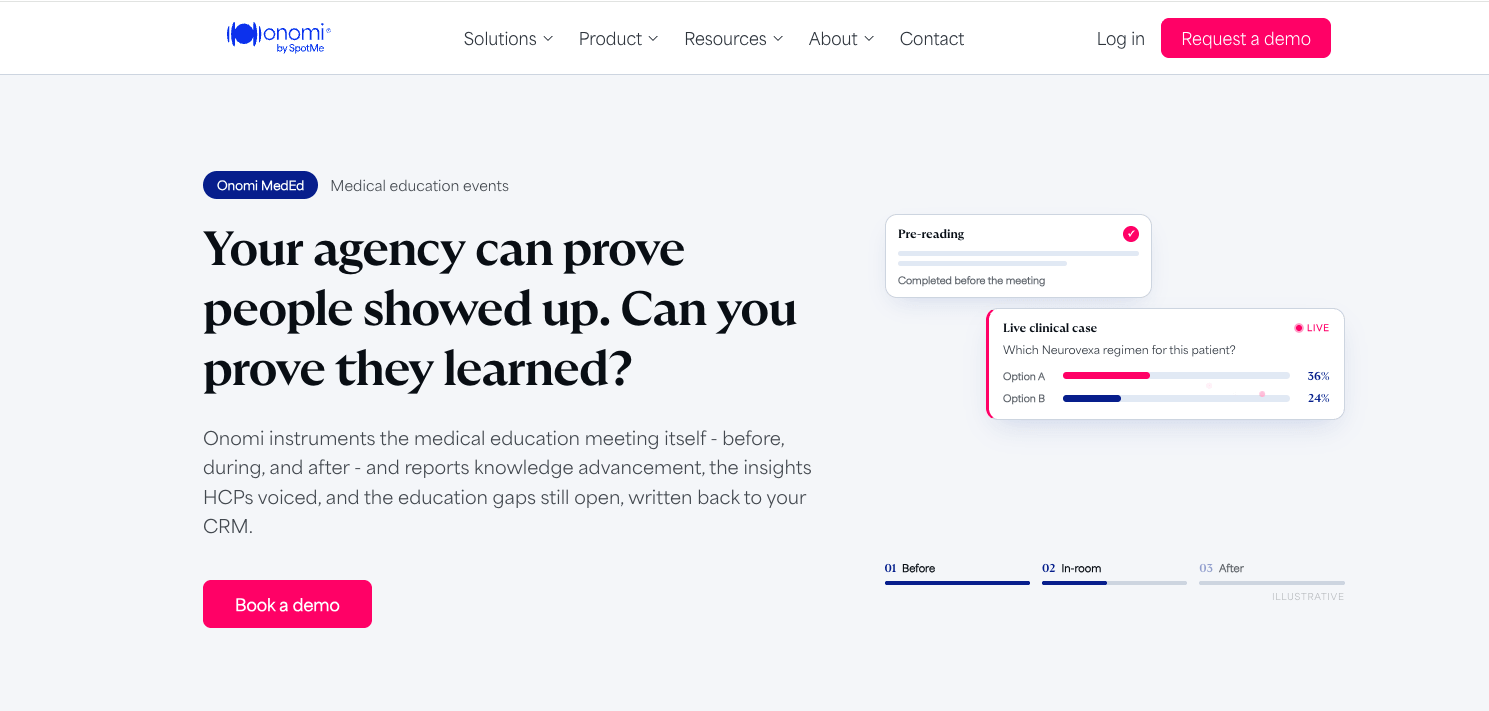
Image credit to Onomi
Quick Verdict: Onomi is SpotMe’s life sciences brand, launched in 2024 for pharmaceutical teams that run scientific meetings and webinars with healthcare professionals (HCPs).
Best For: Global pharma congresses, advisory boards, and medical education meetings needing direct CRM connections.
Key Healthcare Features:
- CRM sync with Veeva and Salesforce: Onomi is a Veeva Silver Product Partner and a Salesforce ISV Partner. Attendance, questions, engagement and consent data appear on the HCP’s account timeline during the webinar.
- HCP meeting compliance tools: Supports HCP verification, localized consent capture, job codes, and a consolidated approval package for medical-legal review.
- Live lecture engagement: Runs polls, Q&A, reactions and meet-the-expert breakouts during live sessions.
Pros: Built around life sciences compliance, with SOC 2 certification and GDPR-aligned consent management.
Cons: Some G2 reviewers of the SpotMe platform mention a steep learning curve and a complicated process for uploading materials.
Pricing: Enterprise-level contract.
4. Cadmium
Image credit to Cadmium
Quick Verdict: Cadmium pairs its Eventscribe event platform with learning management tools, so organizers can turn live conference sessions into on-demand education.
Best For: Healthcare organizations that want to reuse conference presentations as on-demand learning after the event.
Key Healthcare Features:
- Submissions and reviews: Collects abstracts and speaker materials through a submission portal with built-in review.
- EthosCE learning management system: Lets CME providers build courses, manage accreditation, and issue and track credits.
- ePoster Gallery: Displays scientific posters digitally during the conference.
- Live streaming: Streams sessions live and converts the recordings into on-demand content.
Pros: One company provides both the event platform and a learning system for continuing healthcare education.
Cons: Reviewers on G2 and Capterra say moving between the different product components can be tricky without training.
Pricing: Custom quote. Cadmium doesn’t publish its prices.
5. RSVPify
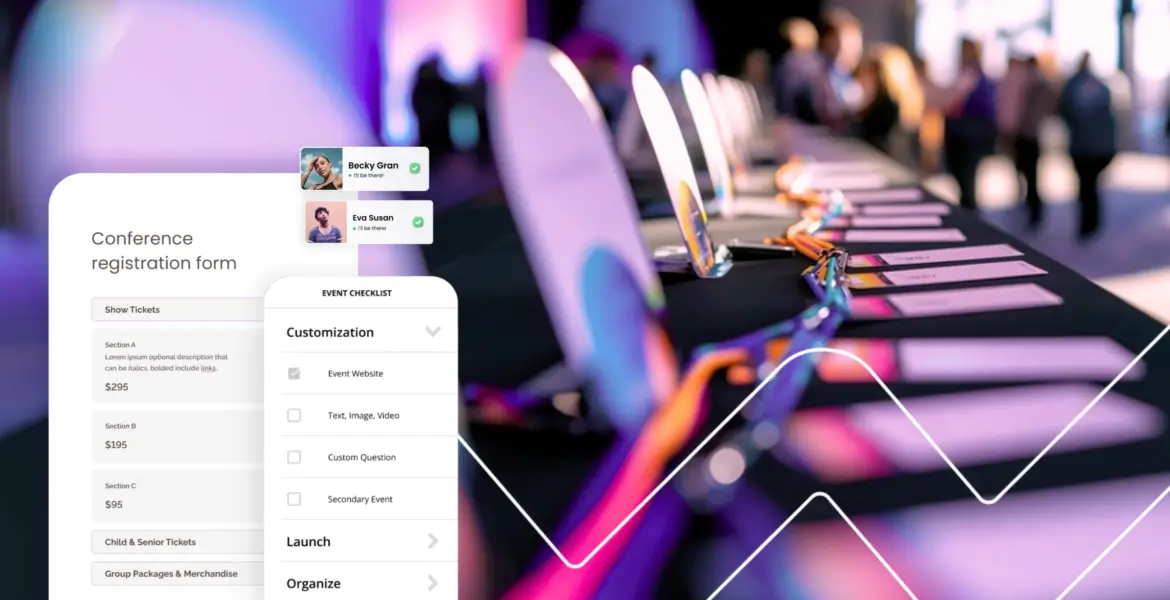
Image credit to RSVPify
Quick Verdict: RSVPify is a registration and scheduling platform with a dedicated healthcare offering for medical practices, hospitals and healthcare organizations.
Best For: Clinics and healthcare organizations hosting patient education events and small medical seminars.
Key Healthcare Features:
- Itemized registration: Offers multiple ticket tiers, à la carte session options and paid add-ons.
- Custom intake forms: Collects patient information, insurance details, dietary needs and required documents.
- QR code check-in: Checks attendees in by QR code and tracks attendance in real time. Organizers can export participation records for continuing education credits.
- Automated notifications: Sends confirmation emails, appointment reminders and follow-up messages.
Pros: Published pricing with a free plan, plus SOC 2 Type II compliance and encryption for data at rest and in transit.
Cons: Has no abstract submission or peer review workflow, so research symposia would need a separate tool.
Pricing: Free plan available. Paid plans start at $39 per month, and ticket sales carry a 1.95% plus $0.90 service fee per purchase.
6. EventMobi
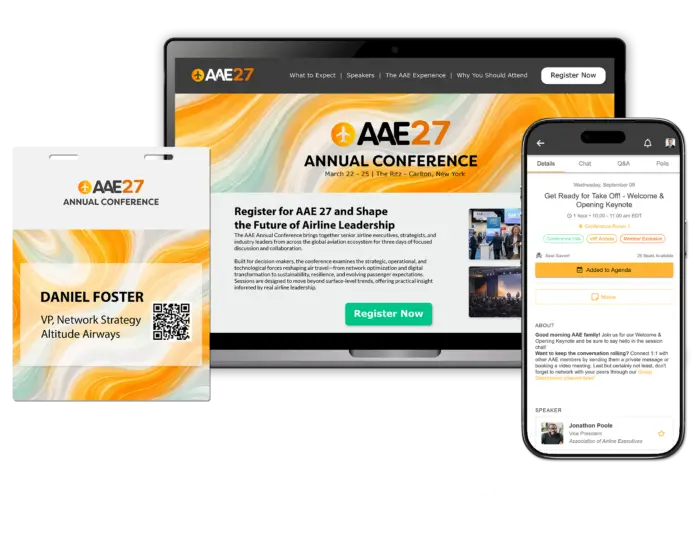
Image credit to EventMobi
Quick Verdict: EventMobi is an event platform and app focused on attendee engagement, with published per-event and annual pricing.
Best For: Healthcare associations that want more attendee participation in sessions and networking.
Key Healthcare Features:
- Session attendance tracking: Attendees scan QR codes to check in and out of individual sessions, and organizers use that record to verify attendance for CE credits.
- Live polling and Q&A: Runs live polls, surveys and audience questions during sessions.
- Gamification: Sets challenges that reward attendees for completing activities at the event.
- Interactive agenda: Attendees can sort sessions by date or track and build a personal schedule.
Pros: Publishes its prices, holds SOC 2 Type II certification, and counts healthcare customers such as HIMSS and the Canadian Medical Association.
Cons: Organizers can display posters and abstracts, but collecting submissions or running peer review requires a separate tool.
Pricing: From $3,000 per event, or from $8,900 per year for unlimited events.
Which Healthcare Event Software Is Right for Your Organization?
Each platform on this list suits a different kind of healthcare event. A committee that picks the wrong fit can end up with a tool too complex for its volunteers, or one without the blind peer review its scientific program depends on.
Pharma and life sciences teams running HCP meetings will find the closest fit in Onomi by SpotMe. Its Veeva and Salesforce connections carry HCP engagement and consent data straight into the CRM.
Organizations that want to turn conference sessions into on-demand education can look at Cadmium. The company pairs its Eventscribe event platform with EthosCE, a learning system built for continuing healthcare education.
For medical conferences, clinical symposia and association meetings, Whova runs abstract management, session check-in for CEU certificates, member registration and name badge printing from the same platform. It holds a 4.8 out of 5 rating on both G2 and Capterra across more than 4,400 reviews, and it has supported more than 50,000 events worldwide.
Ready to see how it works for your next CME conference? Schedule a free Whova demo.

Frequently Asked Questions About Healthcare Event Management Software
Can healthcare event software manage scientific abstracts and online poster presentations?
Yes. Platforms like Whova include Abstract Management, a built-in feature that collects research submissions, assigns reviewers for blind peer review and turns accepted abstracts into agenda sessions. Presenters can then upload their posters to the Artifact Center for attendees to browse in the event app.
How does event management software track CEU and CME credits for attendees?
Attendees scan the QR code at the door of each session with their phones, and that scan becomes their attendance record. Before the meeting, the organizer chooses which sessions and surveys count toward credit. So once someone has checked both boxes, the platform creates their personalized CEU certificate.
Can healthcare event software handle multi-item attendee costs like meals and lodging?
Yes. Whova’s registration lets organizers sell meals as ticket add-ons, each with its own price, so attendees pay only for the lunches or dinners they choose. Every add-on can carry its own question form, so a meal add-on collects dietary restrictions at checkout. Attendees who decide later can go back to their order and buy add-ons after registering.
How does an online Artifact Center benefit medical conference attendees?
Attendees can browse research posters and presentations online as images, PDFs, pre-recorded videos or livestream links. At a hybrid medical meeting, remote attendees can view the same posters as the people in the room. They can leave comments and likes on each item, and organizers can switch on voting if they want attendees to rate the work. Organizers can also keep the Artifact Center open for weeks or even months after the event, so attendees can come back to the research once the meeting ends.
How does lead retrieval work for healthcare event exhibitors?
Exhibitors scan the QR code on each attendee’s name badge with the Whova lead retrieval app on their own phones, so booth staff don’t need dedicated scanning equipment. Exhibitors can score each lead with custom qualifiers and export the full list to a spreadsheet at any point during or after the healthcare congress.
Why is SOC 2 Type II compliance important for healthcare event software?
A SOC 2 Type II report shows that an independent auditor has examined a vendor’s security controls. The auditor also tests whether those controls worked over a period of months. At a medical conference, those controls protect attendee contact and payment details. They also protect unpublished research abstracts. Organizers weighing data privacy can ask any vendor for its report. Whova’s data security page explains how it maintains SOC 2 Type II compliance.
Can event software access information from the organization’s AMS?
Yes, Whova connects with association management systems including iMIS, WildApricot, MemberClicks, YourMembership, Glue Up, Novi and Neon. When a member picks a restricted ticket, they enter their member ID. The platform then verifies their membership against the AMS in real time before they can buy. Organizers can also offer ticket tiers by member level, such as Student, Associate or Full Member.