
By: Whova Team | Last Updated: Jan 21, 2026
What does it take to plan a successful micro event?
The fundamentals of good event planning still apply (clear goals, audience insight, strong programming), but a smaller guest list changes how you put them into practice.
With 10, 30, or 50 attendees instead of hundreds, everything is magnified. Your venue choice sets a tone that everyone will notice. Smaller groups make interactive formats like workshops, webinars, seminars, and roundtables more practical. And the details like name badges, seating arrangements, and follow-up emails get more attention when every attendee’s experience is visible.
With that in mind, let’s go over the micro event strategies that make smaller events punch above their weight.
Key Takeaways
- Micro events follow the same fundamentals as large ones, but a smaller guest list magnifies every detail
- Success comes down to knowing exactly who’s in the room, what they want, and how to make them feel like insiders
- The before, during, and after details matter more at a smaller scale, and the right tools such as Whova make them easier to manage
What are effective micro-event strategies?
A smaller guest list gives you more control, but it also means every choice is more visible. For the best results, focus on these five areas:
1. Set Clear, Attainable Goals
Your goals dictate your format. Decide what you’re trying to achieve first, then work backwards to figure out how to deliver it.
Ask yourself:
- Do you want attendees to learn something, meet someone, or take action?
For example, if your goal is knowledge transfer, a seminar or lunch-and-learn lets you control the message in a focused setting. If you want attendees to leave with a new skill, a workshop gives them space to practice and ask questions. If the point is relationship-building, a networking event creates room for conversation, especially when it’s structured enough to get people talking.
Your goals also need to account for size, duration, and tone.
With a small group, you can run an intimate roundtable where everyone contributes. Try that same format with too many people, and the conversation splinters. Duration matters too. A quick 90-minute session can work for a focused presentation, but if you want a real conversation, you need to give it room to breathe.
Lastly, there’s tone: an informal mixer might suit a creative industry association but feel out of place for a finance or healthcare organisation. The format should feel right for the people in the room.
2. Understand the Target Audience
You can’t design an event that resonates if you don’t know who’s in the room. That’s where personas come in.
In marketing, personas are fictional profiles that represent your ideal customer, built from real data and research. Each one includes details like age, job title, goals, challenges, and preferences. Marketers use them to tailor messaging to specific audiences. The same approach works for event planning.
Create visual profiles of the people you expect to attend. For each persona, ask:
- What’s their role and seniority level?
- What do they want to get out of this event?
- What would discourage them from attending?
You can also segment your audience by demographics like gender, age, location, and industry. A room full of Gen Z marketers calls for a different tone than a gathering of gen x CFOs. Demographics also affect practical decisions, like where you host and how you set up the space.
The clearer the picture on who’s participating, the easier it is to design something that resonates.
3. Prioritize Interaction and Value
With a micro event, you don’t have scale on your side, but you do have the opportunity to make every moment count. That means prioritising quality over quantity, and allocating your budget and resources where they’ll have the most impact, for example:
- Hospitality, such as quality catering and comfortable seating
- Guest speakers who are well-briefed and ready to deliver value
- Marketing like personalised invites and targeted social campaigns
- Event management software like Whova to track registrations, engagement, and feedback.
Your venue matters too. It should align with your brand and set the right tone. A sleek boardroom conveys a different message than a bright, open studio space. Always choose a setting that reinforces the experience you’re trying to create.
Most importantly, focus on interaction. Build in moments that invite participation, such as storytelling that draws people in, Q&A sessions, live polls, and hands-on workshops.
And don’t treat networking as an afterthought. Schedule a dedicated networking slot rather than hoping it happens organically, or try structured one-on-ones where attendees are paired for short introductions.
4. Learn from Past Successful Micro Events
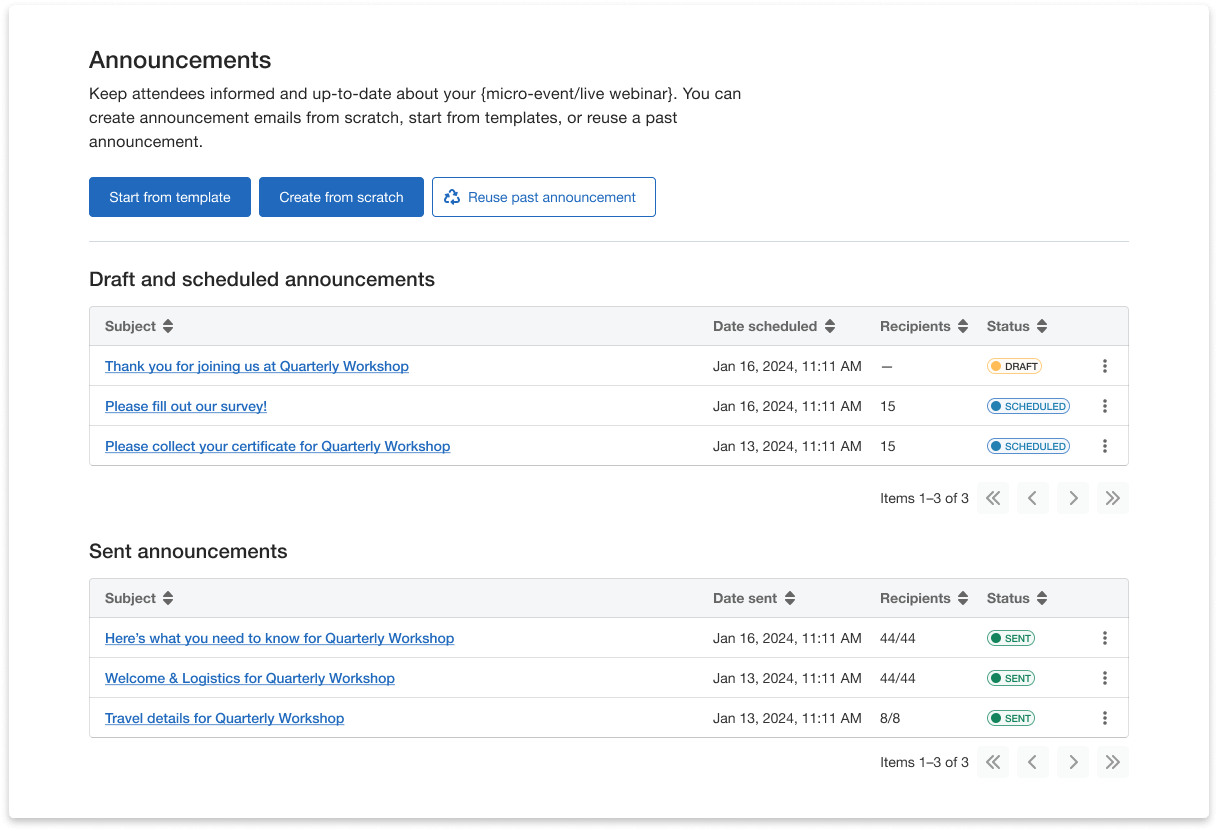
Reuse past successful announcement and organize all your announcements in a single place
Every past event holds lessons. What worked? What didn’t? What would you change? Maybe the venue was too cramped, or the session ran too long. Answering these questions helps you double down on what worked, avoid repeating mistakes, and prioritise where to spend your time and budget next time.
This is where event management software earns its keep. Platforms like Whova store your past announcement templates, surveys, and attendee feedback in one place—so you can quickly pull up what worked and use that data to inform your next micro event.
And if you’re new to micro events, look for case studies from similar organisations. What formats did they use? What made their events memorable? You don’t need to copy them exactly, but you can borrow the principles.
The best micro event strategies are built on lessons learned, refined over time, and made better with each iteration.
5. Provide Exclusivity to Drive Registrations
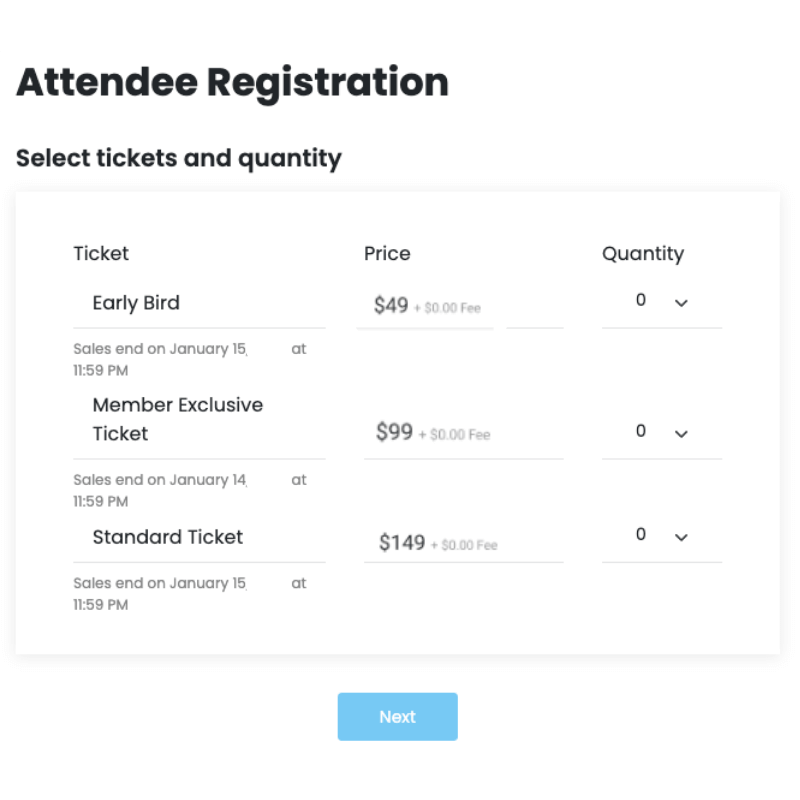
Provide multiple ticket tiers to drive registrations
Micro events are exclusive by design. That’s your chance to offer something attendees can’t get elsewhere, like:
- A hands-on workshop limited to a small group
- A private Q&A with a founder or industry expert
- First look at research or insights before they’re published
- Entry into a closed community or networking group after the event
Recognition matters too. Personalized invitations that acknowledge someone’s expertise make people feel genuinely valued. The same goes for member-only pricing, early-bird access for loyal customers, or a credential they can share afterwards.
It comes down to making attendees feel like insiders. When people believe they’re part of something exclusive, engagement follows. Scarcity triggers urgency, and exclusivity keeps people invested.
Micro Event Best Practices
The before, during, and after event details make a big difference to how your event lands.
1. Before the Event
The lead-up to a smaller event is your chance to set the tone. Do these to set up your event for your success before it starts:
- Send reminders with updates—confirm the time, location, and any last-minute details. This reduces no-shows and keeps attendees informed.
- With a smaller guest list, you should personalise your communication: address attendees by name, reference their role or company, or tailor the agenda preview to their interests.
- If it’s an in-person event, confirm dietary requirements and accessibility needs in advance.
2. During the Event
Keep the momentum going for your event with these practices:
- Provide name badges for in-person gatherings. It sounds simple, but it makes networking easier. People are more likely to start a conversation when they can see someone’s name and role at a glance.
- Consider adding a custom field like an area of expertise or a conversation starter.
- Keep the agenda visible and assign someone to facilitate introductions or transitions between sessions, especially if attendees don’t already know each other.
3. After the Event
Do not forget to keep your event fresh in people’s minds even after it ends. Follow these practices to extend your event’s lifespan:
- Always follow up. Send thank you emails within 24 hours while the experience is still fresh.
- Ask for feedback through a short survey. What worked? What didn’t? This gives you data to improve next time and shows attendees you value their input.
- Share any resources, slides, or recordings from the event to increase retention and extend impact.
- Offer to connect attendees who expressed similar interests.
4. Tickets
Follow these practices to increase ticket sales and increase event participation:
- Consider offering multiple tiers. Different price points and access levels let you cater to a wider audience.
- A standard ticket might cover the main session, while a premium tier could include a private Q&A or extended networking.
- Early bird pricing and member discounts can also help drive registrations.
Make Your Next Micro Event Count with Whova
Micro events give you the chance to create focused, high-value experiences for a smaller audience. The fundamentals of good event planning still apply. A smaller gathering just lets you take them further with greater personalization and more interactive formats.
The micro event strategies we’ve covered are easier to execute with the right tools. Whova’s MicroEvents subscription simplifies the process by bringing registration, check-in, name badges, and surveys into one platform. It also helps you track what works and gather feedback, so each event becomes a chance to improve.
Your next micro events could be your best yet. Request a free demo to see how Whova simplifies the entire process.
FAQ
What are the core strategies for planning a micro event?
Success in micro events comes down to focusing on depth rather than breadth. The core strategies include:
- Defining Precision Goals: Knowing exactly what you want attendees to walk away with.
- Building Audience Personas: Crafting the experience for a specific, high-value demographic.
- Maximizing Interaction: Using the small size to facilitate deeper conversations and workshops.
- Creating Exclusivity: Offering access or insights that aren’t available at larger venues.
How can Whova help plan micro events?
Whova customers are able to use the MicroEvents feature to host micro events throughout the year with familiar tools. Key features include:
- Unified Management: Handle registration, ticketing, and check-in all from one dashboard.
- Automated Branding: Quickly generate custom name badges and branded event webpages.
- Efficient Templates: Save time by reusing announcement and survey templates for year-round event series.
- Webinar hosting: Quickly set up small webinars in the same platform with tiered ticketing and automated reminders
- Repurpose Content with VOD: Generate revenue flows with video on demand libraries on training sessions or conference keynotes.