
Author: Whova Team | Last updated: July 06, 2026
If you’re looking for alternatives to Swapcard in 2026, choosing the right event platform starts with understanding your event goals and operational needs. Compare how each option supports registration, exhibitor management, networking, mobile experiences, integrations, analytics, and on-site operations. This guide reviews eight leading Swapcard competitors, highlighting their key strengths, primary use cases, and standout features to help you choose the platform that best fits your events.
Which Swapcard Alternative is Right for You?
Here are the best alternatives based on your event goals
Why are organizers switching from Swapcard in 2026?
Setup complexity in advanced configurations
According to some organizers, Swapcard can be seen as intuitive and easy to use for most core event features such as registration, networking, and attendee engagement. However, other reviews explained that there is a learning curve due to some of its advanced configuration and customization.
Desire for more flexible customization
Organizers highlight strong usability but also point out limitations in some customizations, particularly in branding and dashboard setting configuration depth.
As a result, some event teams evaluate alternatives when they need more granular control over layouts, workflows, or data structure.
Enterprise-oriented structure and workflows
Swapcard positions itself as an end-to-end event platform that can take care of engagement, networking, and monetization capabilities. This makes it appropriate for large enterprise events that require more moving parts.
However, teams with lighter operational needs sometimes prefer more accessible yet powerful tools with fewer layers of configuration or more modular pricing and setup.
How Should You Compare Swapcard Alternatives?
Keep in mind that the right platform needs to chosen based on the core functionalities that will keep your event moving. Some teams may look for attendee engagement updates, consistent check-in experiences, or quick networking tools for fast and seamless interaction across mobile and on-site experiences. Some might look for sponsor visibility options or exhibitor management tools.
To make a clearer decision, focus on evaluating the criteria that reflects how Swapcard is typically used in practice:
Real-time engagement and networking performance
Assess how well each platform supports live networking, matchmaking, and attendee interaction during the event. Prioritize platforms that make engagement features easy for attendees to use in real time.
Mobile app adoption and usability
Since many Swapcard-driven events rely heavily on mobile engagement, compare how intuitive each platform’s event app feels for attendees. Look at how quickly users can perform the essential tasks such as accessing sessions, connecting with others, and viewing important event information without friction.
On-site check-in and operational flow
Evaluate how each platform handles check-in speed and badge printing during peak arrival times. Strong alternatives should reduce bottlenecks rather than create additional coordination steps for staff.
Data synchronization across features
Check how smoothly attendee and participant data flows between registration, mobile apps, and on-site tools. Look for platforms that minimize manual exports and help streamline event data across different event planning stages.
Customer support responsiveness during live events
Review how each platform handles urgent issues during active event days. Platforms that offer fast, human support when real-time problems arise are clear winners.
Brief Comparison of Swapcard and Alternatives
Swapcard Alternatives and Competitors in 2026: Features, Reviews, and Pricing
1. Whova
The first Swapcard competitor on our list is Whova. Whova is a top-rated all-in-one event management platform that has won event technology awards year after year. . Whova has a vast selection of robust, customizable features that make the platform useful for organizers of all different types of events. These feature offerings make the event management process smoother and more efficient before, during, and after the event.
Whova’s registration system takes care of the entire ticketing process and tightly integrates with the rest of the platform. Once attendees register for an event, they’re automatically added to the attendee list, which is viewable before the event. This pre-event access upon registration is a great way for attendees to see who else is coming and connect with them before the event. Whova’s attendee match-making makes it easy to find other attendees with similar interests and backgrounds, to take some of the social pressure off and streamline networking opportunities. to explore the upcoming event as well as connect with other attendees before the event begins. The attendee list isn’t the only thing they get to check out before the event. They can also get excited and prepared for the event by viewing the event agenda, speakers, and any content the organizers have uploaded to.
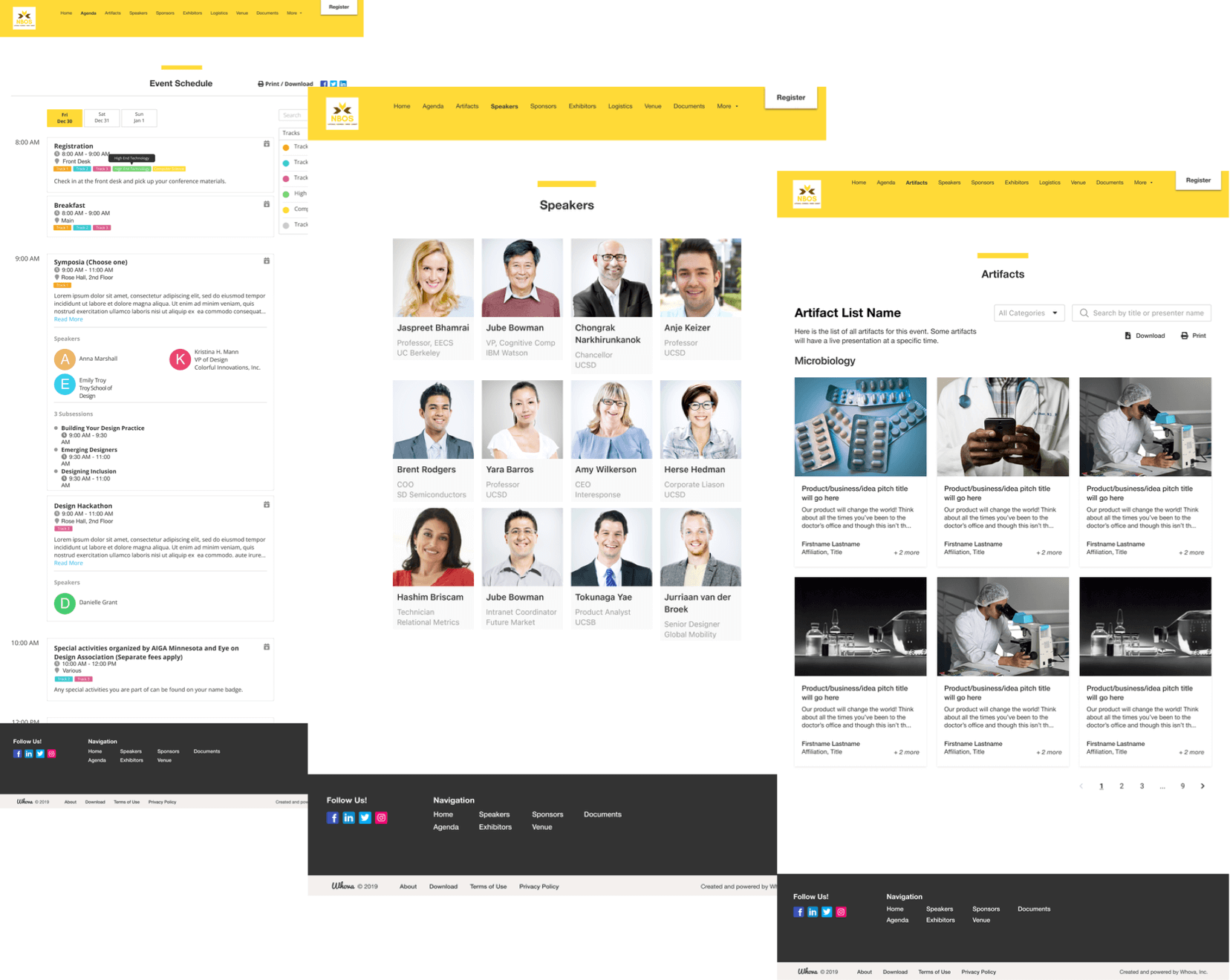
Whova also makes event website creation a breeze! Schedules, speakers sponsors, exhibitors, venue maps, documents, logistics, and more data categories are automatically generated into webpages with a variety of eye-catching templates and options for further customization. Whether they’re shared as a direct link or embedded into an existing event website, all of the webpages are instantly updated to reflect any schedule or info changes.
Whova also has tons of great attendee engagement tools that boost interaction during the event, including live Q&A, live polling and surveys, live chat, community discussion board, and gamification. Event organizers can also send real-time notifications through the app to make announcements, reminders, or share important information. After the event, Whova provides a comprehensive post-event analytics report full of key metrics.
Best For
General conferences, academic conferences, association events, expos, and trade shows.
Key Features
- Branded attendee registration with customizable forms
- Onsite badge generation
- Self check-in through kiosk or QR code scanning
- Automated event website creation
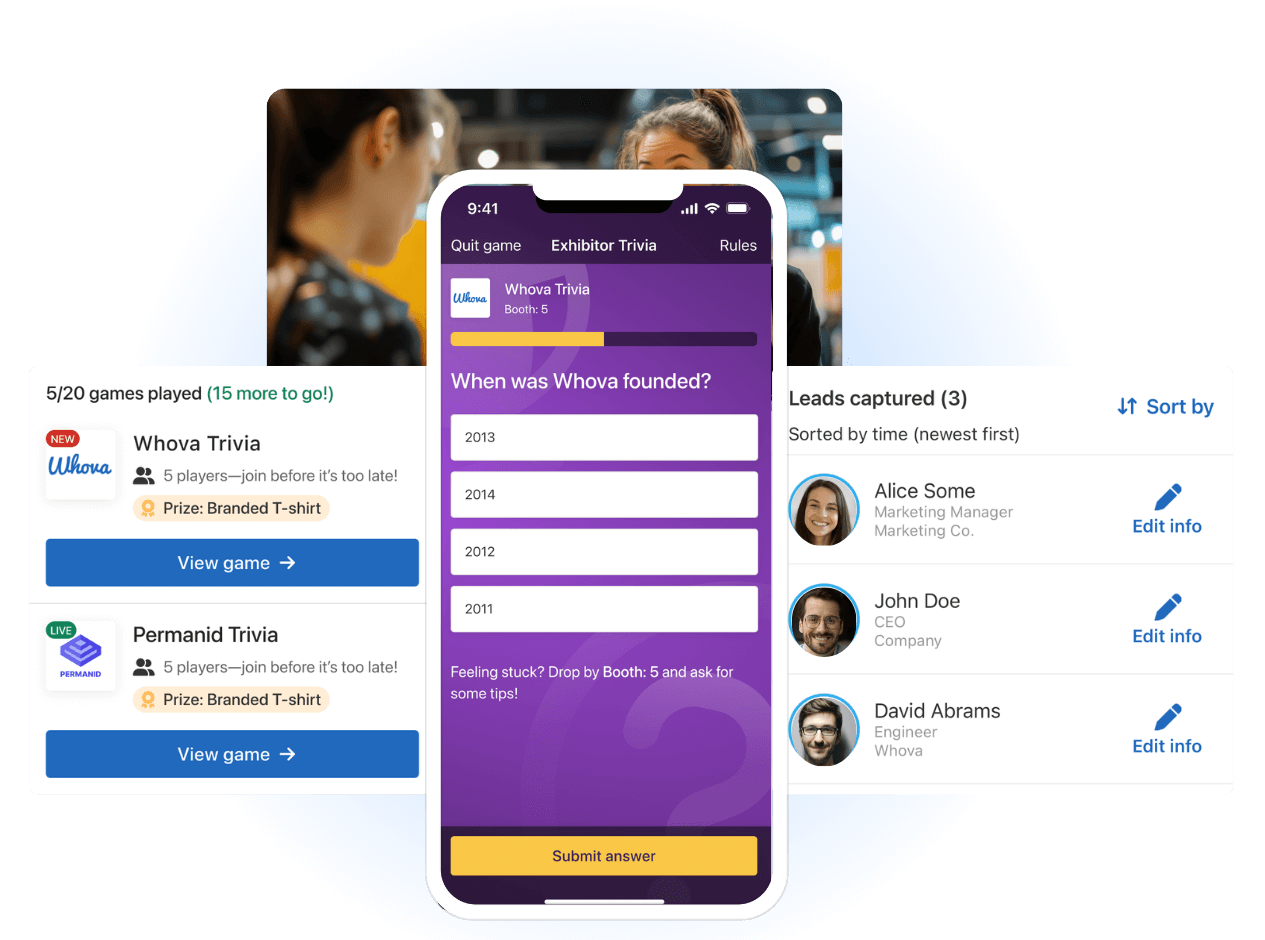
- Exhibitor management and lead collection
- Sponsor visibility opportunities
- Networking and engagement features through polls, community boards, 1-1 meetups and more
Pros
User reviews consistently highlight an the intuitive event management dashboard and mobile interface. Provided tools cover full event cycle with good engagement features.
Cons
The interface structure offers limited stylistic customization for teams looking to completely overhaul the application layout.
Pricing
Available upon request, but affordable for most organizations

2. EventsAir
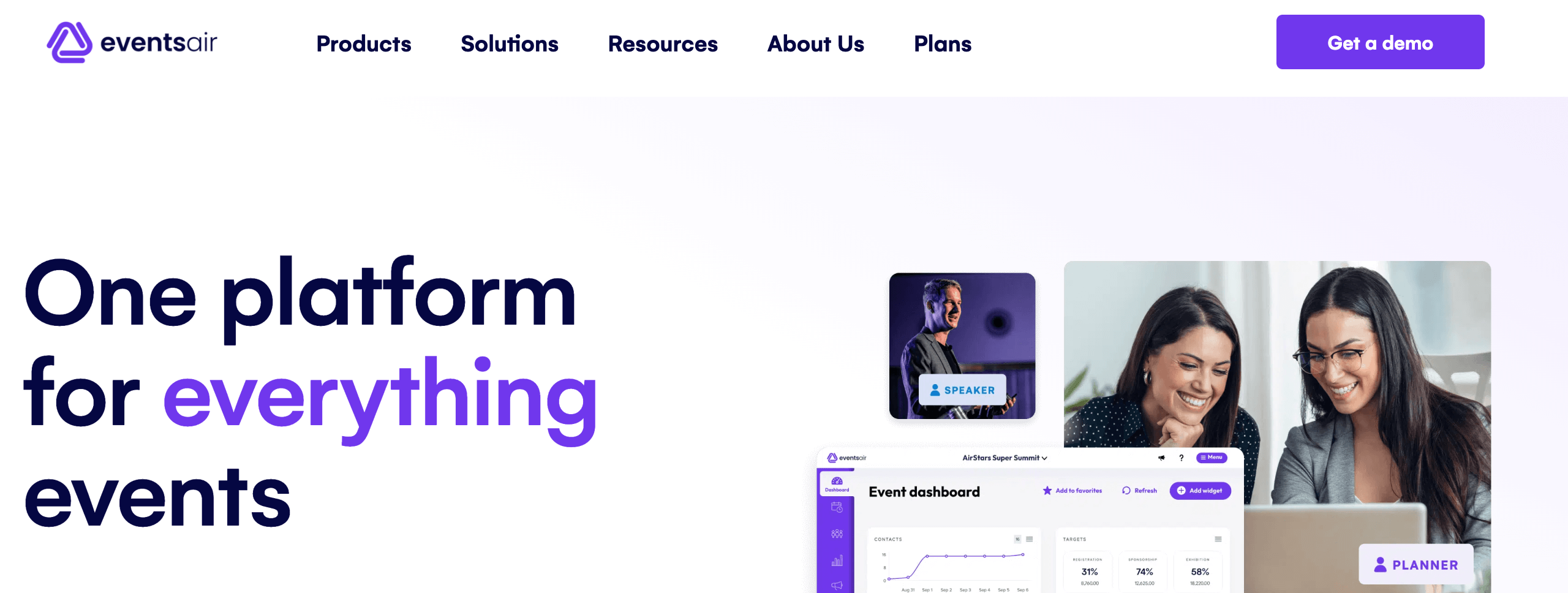
Image credit to EventsAir
EventsAir is another Swapcard alternative that provides organizers with an event management system for in-person, hybrid, and virtual events. The EventsAir platform is extremely flexible and allows organizers to convert their events from in-person to hybrid/virtual and vice versa. Their pricing follows a similar flexible standard where organizers only pay for the features they need. EventsAir also has a 24/7 live support team to assist event organizers to troubleshoot their platform.
EventsAir has been around for 30 years, starting out as an online event registration platform and evolving to become a multi-faceted event platform. The platform has great pre-event features including a travel management hub, an interactive floor plan, and a budgeting dashboard. During the event, organizers can set up a simple on-site check system, activate gamification, and allow attendees to meet one-on-one through online portals. After the event, organizers can view their ROI on a specific dashboard along with different leads, survey results, and custom reports.
Best For
Global enterprise exhibitions and corporate teams managing extensive internal travel requirements.
Key Features
- Travel management hub
- Interactive venue floor plans
- Localized budgeting dashboards
- One-on-one networking portals
Pros
High structural flexibility allows organizers to pivot formats from physical to virtual setups smoothly.
Cons
The amount of backend menu configurations can create a steeper learning curve for new event staff members.
Pricing
Available upon direct enterprise request based on per-event, multi-event or enterprise packages.
3. ExhibitDay
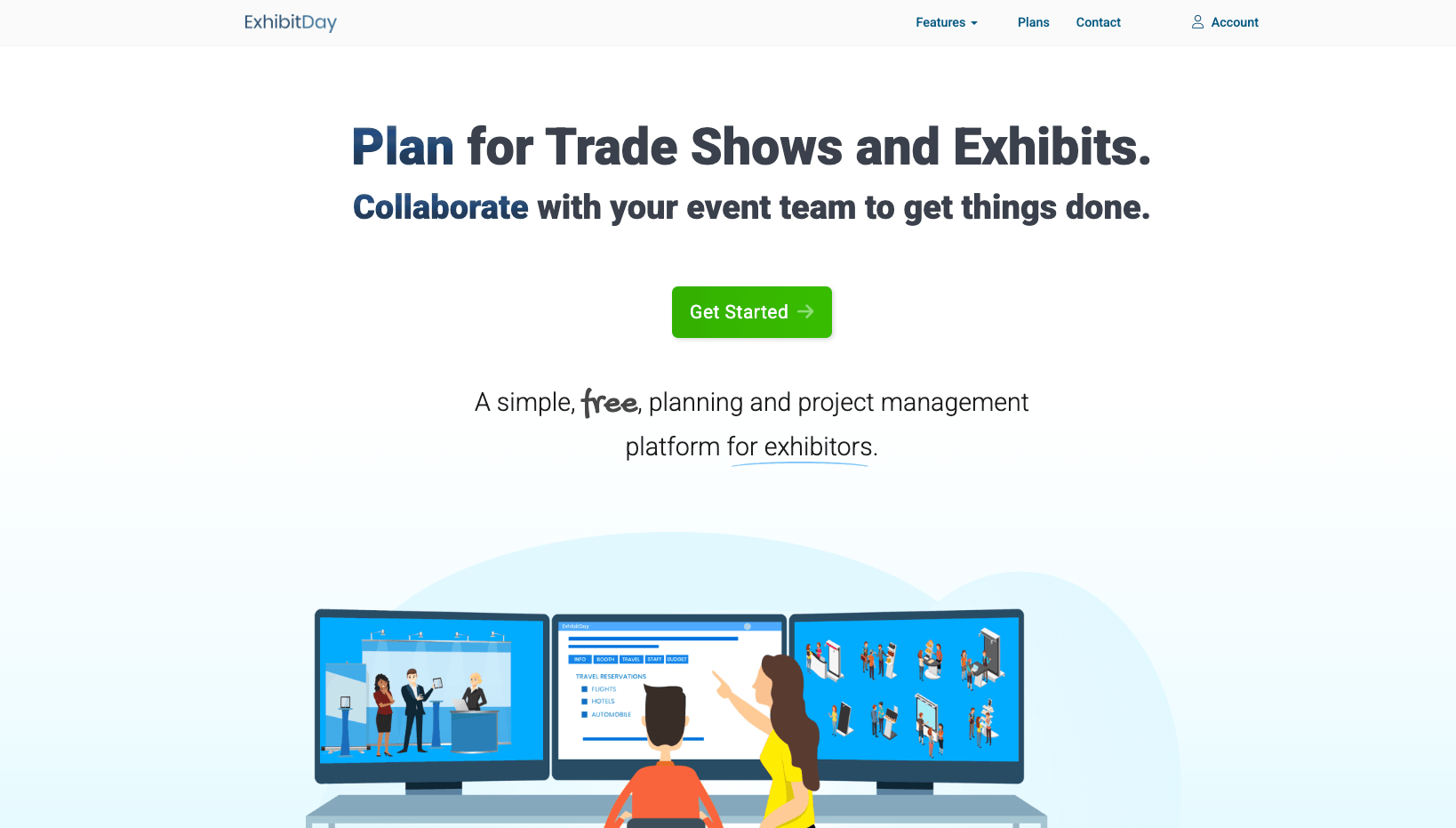
Image credit to ExhibitDay
ExhibitDay is a project management platform built for trade show organizers and exhibitors. It helps organizations manage booth planning, team collaboration, budgets, and event logistics from a single workspace.
Best For
Trade show exhibitors, event marketers, and small to mid-sized teams managing multiple events or booths.
Key Features
- Budget tracking
- Asset inventory management
- Travel planning
- Customizable event fields
- Task management
- Team collaboration tools
Pros
The platform is easy to set up, allowing most teams to get started and organize their workflows right away.
Cons
Advanced integrations and API access are available only on higher-tier plans.
Pricing
Offers a free plan with professional plans starting at $99 per month.
4. Evenium ConnexMe
Image credit to Evenium
Evenium Solutions is an alternative to Swapcard that provides hybrid, virtual, and in-person event experiences. Made for event planners, presenters, and decision-makers, Evenium is quite a versatile platform, which can be used for exclusive, small webinars or large multi-lingual conferences.
With both a web and mobile application, Evenium ConnexMe has many great features. For hybrid and virtual events, the platform offers a live video streaming and live slide sharing option to ensure access for all participants. Group collaboration is simple with ConnexMe, as it allows for live presentation annotations and visual polling from a presenter. ConnexMe also provides presenters with great features like a remote control and voice commands.
Best For
Corporate workshops, internal training seminars, and interactive panel sessions.
Key Features
- Live slide sharing
- Visual polling tools
- Interactive on-screen slide annotations
- Voice-activated presenter commands
Pros
Presenters gain excellent live control features straight from their mobile devices.
Cons
Lacks deep end-to-end logistics modules like abstract management or complex venue sourcing.
Pricing
Single-event plans open from $999, with unlimited monthly subscriptions starting from $400/month.
5. Zoho Backstage
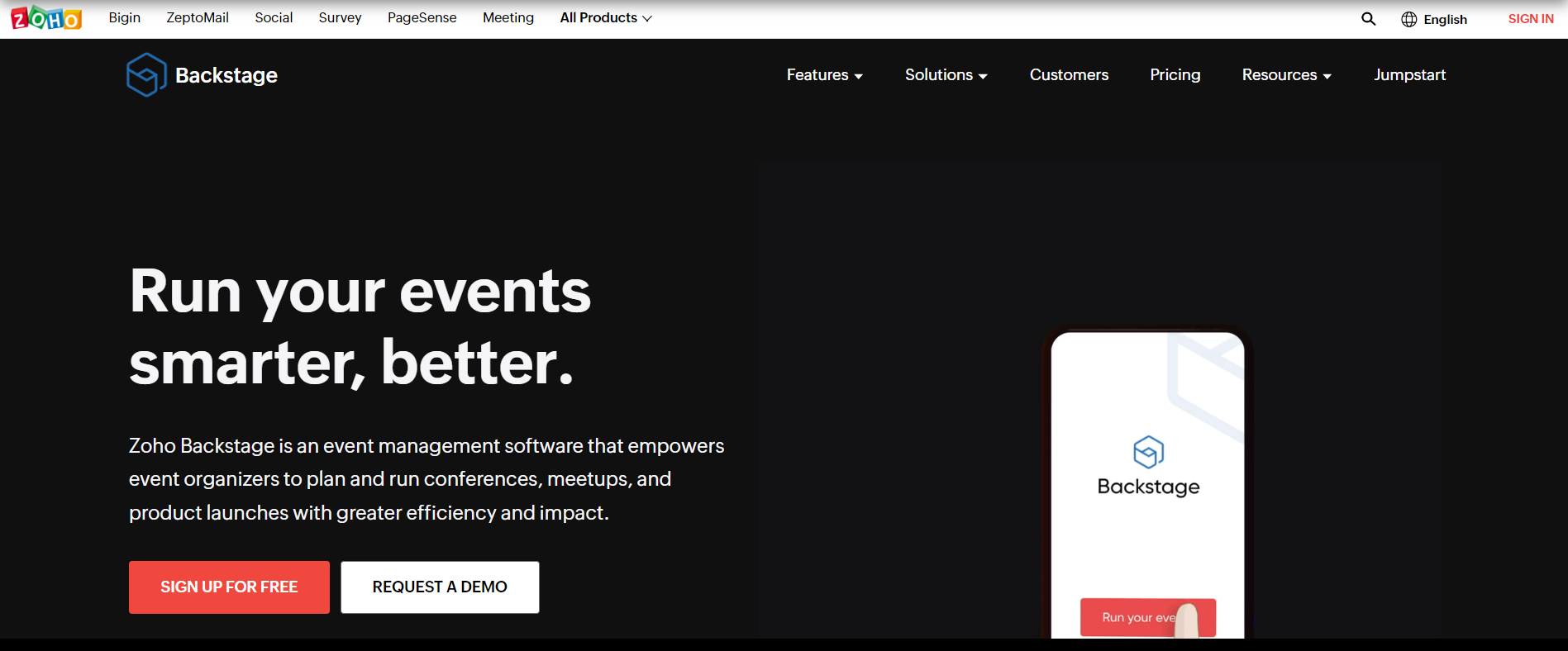
Image credit to Zoho Backstage
Zoho Backstage is an all-in-one management software and another strong alternative to Swapcard. Zoho enhances any in-person, virtual, or hybrid event from beginning to end. Zoho can handle event website creation, registration and ticketing, and marketing of the event. During the event, attendees, presenters, and organizers are able to easily communicate with each other via online/offline chat, push notification announcements, and presentation slide interaction.
Zoho Backstage can even help with onsite event operations. The platform can assist in attendee check-in with QR code scanning and walk-in registration. They also have a tool called BadgeUp, which organizers use to design name badges. Organizers can also gauge how many attendees showed up to the event, how long they stayed, and who did not show up.
Best For
Marketing teams already utilizing corporate systems within the Zoho architecture.
Key Features
- Ticket marketing campaigns
- Visual badge creation tools
- Walk-in registration portals
- QR check-in capabilities
Pros
Streamlines data by connecting attendee registration straight into central CRM databases.
Cons
The built-in community engagement features are less developed than platforms focused exclusively on attendee networking.
Pricing
Subscription ranges from $0/month to $279/month while per event pricing goes from $0 to $416/month.
6. Eventtia
Image credit to Eventtia
Eventtia is a Swapcard alternative that can help manage online and in-person events. Made primarily for marketers to grow their business, Eventtia has many great event management features. The platform can assist with online registration, email campaigns, check-in, name badges, and an event website.
If problems or questions arise, Eventtia has a dedicated support team that helps organize and maximize the success of their event. Eventtia also provides a mobile app that organizers can personalize and brand for their attendees. Additionally, for virtual events, Eventtia has streaming integrations with six different platforms including Zoom and Microsoft Teams. For post-event information, Eventtia provides surveys and a data-driven report.
Best For
Corporate marketing teams focused on brand awareness and commercial pipeline tracking.
Key Features
- Automated email workflows
- Mobile layout personalization
- Checked-in data monitoring
- Post-event survey builders
Pros
Direct streaming integrations with major platforms like Microsoft Teams and Zoom simplify virtual setups.
Cons
User reviews note that modifying advanced layout components can occasionally feel less intuitive under tight deadlines.
Pricing
Pricing plans start with the basic plan from $1650 to the networking plan from $3,500. The plans provide unlimited events but additional attendee credits need to be bought based on the event size and features.
7. OpenWater
Image credit to OpenWater
OpenWater is different from the other Swapcard competitors on this list. OpenWater has both an awards program platform, as well as an event management platform. The event management platform can handle virtual, hybrid, and in-person events, specializing in association events. If organizers have questions or problems with the platform, OpenWater has an award-winning customer support team to help get the event back on track.
All conference materials for all conference participants are located in a single place on OpenWater. They handily collect abstracts, speaker materials, exhibitor information, and more without having to format data. The virtual platform is even more impressive. OpenWater can host the event schedule, sessions, sponsor & exhibitor pages, and poster gallery.
Best For
Academic conferences, professional trade associations, and events running complex award programs.
Key Features
- Abstract submission portals
- Blind peer-review rubrics
- Virtual poster galleries
- Integrated session builder
Pros
Processes thousands of scholarly submissions for awards, scholarships, grants or simple applications.
Cons
The platform is mostly focused on submission management and basic agenda building which might be insufficient for organizers who want more management tools.
Pricing
Provided via custom quotes.
8. b2match
Image credit to B2match
Our last Swapcard alternative is b2match. B2match is an event networking platform that helps event organizers plan in-person, hybrid, or virtual events. Attendees start the event with a match and end up with meaningful relationships with other attendees. The platform also has many typical event management platforms features like registration management, agenda creation, and exhibitor management.
The platform is also excellent for job and career fairs utilizing the same great matchmaking technology as more traditional events. These recruiting events include a job board, company pages, applicant profiles, and, of course, matchmaking. Analytics are also available through b2match. There is data available on registrations/ticket sales, attendee activity, and more.
Best For
Corporate trade fairs, recruitment events, and structured commercial buyer-seller meetups.
Key Features
- Job board to facilitate job opportunities
- Profile matching filters
- Custom corporate landing pages
- Automated appointment calendars
Pros
The targeted matchmaking logic help complete high value commercial meetings between participants.
Cons
The platform format is too niche for other standard conferences that require broad informational sessions and exhibitor management.
Pricing
Pricing starting with the Starter pack for €699/yearly with custom prices on higher plans.
Which Swapcard Alternative Is Right for You?
Choosing the right Swapcard alternative comes down to the type of events you plan to run and the level of operational complexity you can manage.
If you run large enterprise exhibitions with heavy logistics, travel coordination, and multi-team planning, EventsAir is a strong fit. If your focus is trade shows with booth management, shipping coordination, and asset tracking, ExhibitDay helps you stay organized without adding unnecessary complexity.
If you’re planning conferences or association events and want an intuitive dashboard that covers your full event cycle, Whova is a popular choice. It’s known for quick setup, customizable registration, reliable check-in flows, effective exhibitor management tools, and strong attendee engagement. To try Whova for free, request a demo here.
FAQ
Is there a more affordable alternative to Swapcard?
Yes. Platforms like Whova utilize flexible per-event pricing models that align costs with attendee volume and feature usage to avoid fixed multi-year enterprise contracts often associated with Swapcard.
Which Swapcard replacement provides the fastest deployment?
Whova is often chosen for its fast setup time. Organizers can configure registration pages, build multi-track agendas, and deploy an automated website in under 1 day without technical assistance.
Which platform handles attendee matchmaking best?
If your primary goal is structured attendee and participant matchmaking with networking, Whova and b2match offer meeting schedulers and profile matchmaking to facilitate organic meetups among participants.