
Author: Whova Team | Last updated: May 26, 2026

Curious who the major vFairs competitors are? Here, we’ll analyze the competition and provide you with the best alternatives to vFairs.
vFairs is widely recognized for its virtual 3D environments, but event organizers often seek alternatives that provide simpler setup, stronger mobile engagement tools, and transparent pricing models. Compare and read more about the platforms compared to see which ones fit for your in-person, virtual or hybrid event.
Which vFairs Alternative is Right for You?
| Your Goal | Recommended Alternative | Why it Wins |
| All-in-one event management with top-rated mobile networking | Whova | Simple to set up, delivers robust native engagement and event management features such as registration, check-in and agenda management. |
| Quick browser-based webinars and automated marketing streams | Livestorm | Operates entirely in-browser without complex virtual booth designs. |
| Full 3D virtual trade shows at a scalable entry cost | HexaFair | Replicates the 3D aesthetic while specializing in standalone virtual booths. |
| Robust all-in-one event hosting with white label branding | Accelevents | Delivers streamlined registration flows alongside comprehensive virtual features. |
| Simplified multi-track agenda scheduling | Sched | Minimizes backend complexity by focusing intensely on clean, accessible layout schedules. |
| Scalable enterprise software backed by secure hardware options | Webex Events | Leverages the enterprise Cisco ecosystem to power highly secure large-scale events. |
| Familiar, highly accessible corporate virtual meetings | Zoom Events | Leverages the mainstream Zoom infrastructure for immediate attendee adoption. |
| Enterprise-grade B2B marketing hubs and demand generation funnels | ON24 | Utilizes deep data tracking and AI personalization for corporate buyer journeys. |
Why do event organizers look for vFairs alternatives?
While virtual-lobby environments offer an immersive visual experience, limitations in other administrative tools have pushed organizers to look for different alternative solutions. Some of these include the complex backend, steep learning curve, limitations in mobile app functionalities and high cost for additional features.
Complex Backend Administration
Configuring custom 3D graphics, avatar configurations, and spatial floor plans often demands high technical skills. Reviewers frequently note that updates require direct customer support which limit the organizer’s self control accessibility.
Steep Learning Curve for Speakers and Hosts
Users requires a considerable onboarding process to use the multi-layered virtual dashboard. Presenters and speakers sometimes struggle behind-the-scenes while transitioning in their live sessions.
Mobile App Functionality Limitations
Because the software is heavily engineered around detailed desktop browser graphics, the accompanying mobile application experience can feel less comprehensive for on-the-go participants. Especially for hybrid events that still need to consider the in-person experience, a robust mobile app is essential for engagement and live updates.
High Cost of Custom Add-ons
In Vfairs, building out tailored interactive spaces or implementing unique third-party integrations usually involves premium add-on fees, which can quickly strain mid-market event budgets.
How Should You Compare vFairs Alternatives?
When evaluating Vfairs alternative platforms, you should consider five primary metrics to determine the right software for your event needs:
- Ease of Use: The admin dashboard and presentation controls should be simple even for non-technical users.
- Features & Integrations: The availability of agenda tools, interactive community boards, registration, and direct CRM data synchronization is essential to manage all event related tasks.
- Scalability: The platform’s capability to support virtual, hybrid, and enterprise events.
- Pricing Transparency: The presence of clear, scalable, or flexible plans without unexpected up charges.
- User Reviews: Historical satisfaction metrics across independent platforms like G2 and Capterra from verified testimonials.
Brief Comparison of vFairs and Alternatives
The table below provides a high-level comparison of core system capabilities, base pricing, and primary platform focus.
| Platform | Features | Pricing Format | Administrative Complexity | Primary User Focus |
| vFairs | 3D spaces, custom avatars, live chat networks. | Requires contacting sales team | High (Requires support setup). | Desktop virtual immersion. |
| Whova | Native mobile app, hybrid networking, virtual booth profiles, abstract management, customized registration | Requires contacting sales team | Low (Intuitive self-service). | All-in-one event management with high mobile engagement. |
| Livestorm | Browser streaming, automated webinars, analytics dashboards. | Pro starts at $1,200/year | Low (Instant launch). | Frictionless browser access. |
| HexaFair | 3D exhibition booths, VR integrations, chat rooms. | Requires contacting sales team | High (Graphic dependent). | 3D environmental trade shows. |
| Accelevents | Badging, registration, 24/7 support, streaming hubs. | Tiers start at $7,500 flat-rate | Moderate (Setup wizard). | All-in-one execution flexibility. |
| Sched | Multi-track agenda, speaker profiles, schedule builders. | Per event plans start at $600 per event | Low (Quick deployment). | Agenda tracking and scheduling. |
| Webex Events | Real-time tracking, digital badges, streaming tools. | Requires contacting sales team | Moderate (Enterprise feature array). | Highly secure corporate scale. |
| Zoom Events | Multi-session hubs, standard streams, custom ticketing. | Tiers start at $415/month per org | Low (Familiar standard interface). | Widespread general accessibility. |
| ON24 | Personalization modules, content hubs, marketing metrics. | Requires contacting sales team | High (Data integration heavy). | B2B buyer intent tracking. |
The 8 Best vFairs Alternatives for 2026
*Reviews are an average of Capterra, TrustRadius and G2
1. Whova
Overall score
4.8 / 5.0 (4,621 Reviews)
Key Takeaway
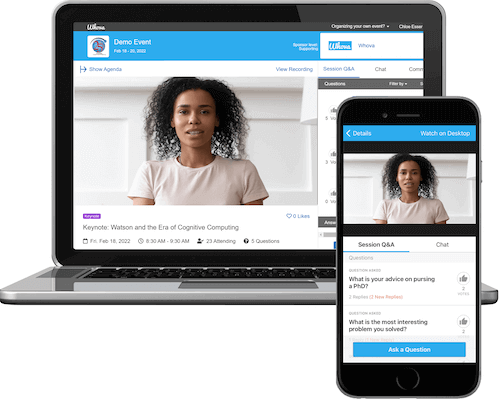
Whova delivers an easy-to-use, comprehensive event management system that effectively bridges the gap between virtual, hybrid, and in-person event types alongside its industry-recognized mobile application.
Switch Factor
Event teams routinely transition from vFairs to Whova to dramatically cut down on setup times. Instead of spending weeks building out customized 3D spatial representations, organizers can launch full-featured agendas, community boards, virtual booth profiles and online sessions on the same dashboard.
vFairs vs. Whova
While vFairs allocates the majority of its architecture toward recreating physical exhibition spaces visually inside a desktop browser, Whova concentrates on driving authentic human interaction. Whova relies on the community board, virtual networking meetings, and a robust mobile app that keep remote and on-site participants connected simultaneously.
Best for
Corporate conferences, academic symposiums, association events, trade shows and expos that require attendee engagement and flexible hybrid logistics.
Pros
- Highly rated mobile application for engagement and networking that connects on-site and remote participants seamlessly.
- Supports live streams, pre-recorded video, and accessibility on mobile devices, tablets, laptops, and desktop computers.
- Streamlined exhibitor and sponsor management with customizable virtual booth profiles.
Cons
- Does not provide 3D visual environments, virtual-world representations, or animated participant avatars.
- No floor plan builder functionality
Key Features
Customizable registration flows for different attendee types, community board for discussions, integrated abstract submission review systems, mobile and on-site check-in, and built-in sponsor promotion spaces.
Pricing
Per event pricing package with selected features and event size.

2. Livestorm
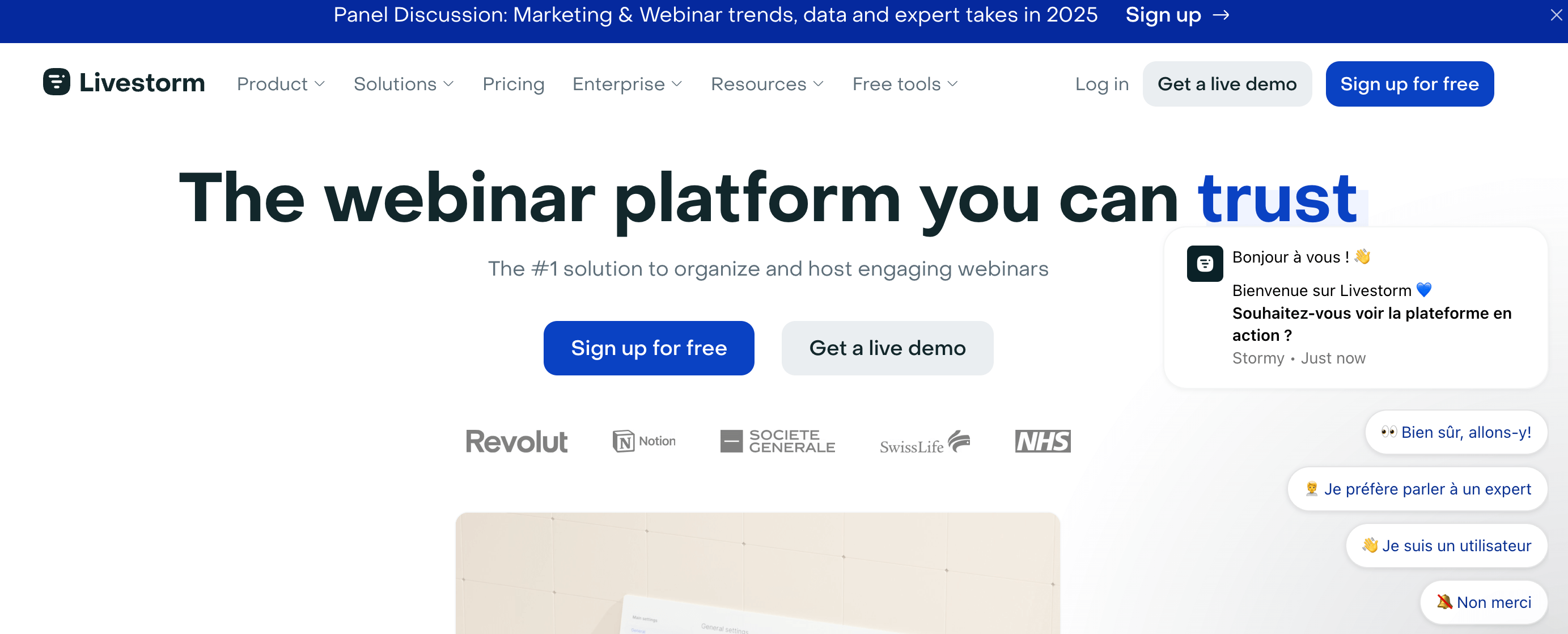
Image credit to Livestorm
Overall score
4.5/5 (1948 reviews)
Key Takeaway
Livestorm functions as a streamlined, browser-based streaming solution optimized for hosting webinars, live product demonstrations, and corporate online meetings.
Switch Factor
Moving to Livestorm removes the technical hurdles of downloading standalone applications or designing complex graphic venues. Planners can create broadcast links in moments compared to the setup required for heavier virtual environments.
vFairs vs. Livestorm
vFairs excels at building large-scale multi-room simulated conventions, whereas Livestorm eliminates environmental simulation entirely in favor of an optimized, clean single-screen broadcast layout focused on real-time audience conversions.
Best for
Corporate marketing teams and internal training divisions focused on recurring online presentations and lead generation.
Pros
- Fully browser-based architecture that eliminates the need for attendees or presenters to download external software extensions.
- Strong built-in workflow automations for recurring webinar schedules and integrations with CRM.
Cons
- Limited advanced branding customization capabilities for registration layout grids and staging viewports.
- Lacks the complex logistics tools (such as abstract management or check-in tools) required for large hybrid conferences.
Key Features
Automated webinar broadcasting, customizable registration landing pages, deep post-event viewer analytics, lead conversion tools, live chat and Q&A, CRM integration and document sharing.
Pricing
Pro plan for $1,200 / year or Enterprise plan that requires pricing quote from sales team.
3. HexaFair
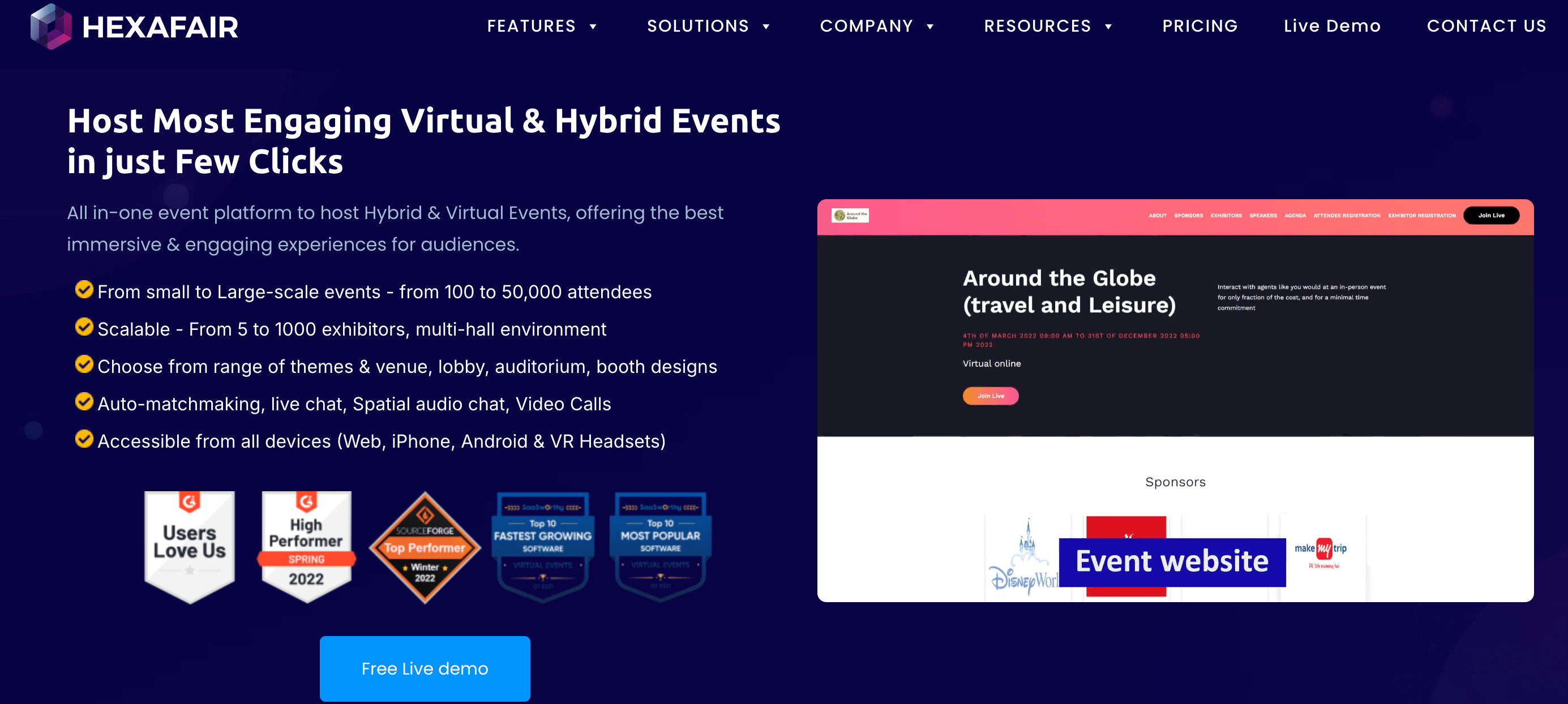
Image credit to Hexafair
Overall score
4.4/5 (41 reviews)
Key Takeaway
HexaFair provides a specialized 3D virtual trade show environment that centers heavily on virtual exhibition booths, digital product showcases, and continuous online expos.
Switch Factor
HexaFair offers a direct aesthetic match to vFairs for groups determined to maintain a 3D digital floor plan, but with a distinct layout tailored toward exhibition booths.
vFairs vs. HexaFair
While both applications use virtual reality aesthetics, HexaFair features alternative administration workflows that allow booth operators to easily upload their own video walls and brand materials without too much assistance.
Best for
B2B trade shows, commercial product exhibitions, and virtual job fairs prioritizing visual sponsor spaces.
Pros
- Scalable 3D virtual environment frameworks designed specifically for trade show floor displays.
- Accessible baseline entry-pricing tiers compared to high-end enterprise immersive software products.
Cons
- Event success depends heavily on the event team’s ability to prepare and upload custom high-resolution graphic assets.
- Virtual navigation layouts can experience rendering delays for attendees operating on standard-speed internet connections.
Key Features
Immersive 3D virtual lobbies, interactive digital exhibition booths, integrated VR headset compatibility, direct booth-level chat interfaces, speaker and sponsor management tools, flexible registration and event landing pages.
Pricing
Contact sales team for accurate quote
4. Accelevents
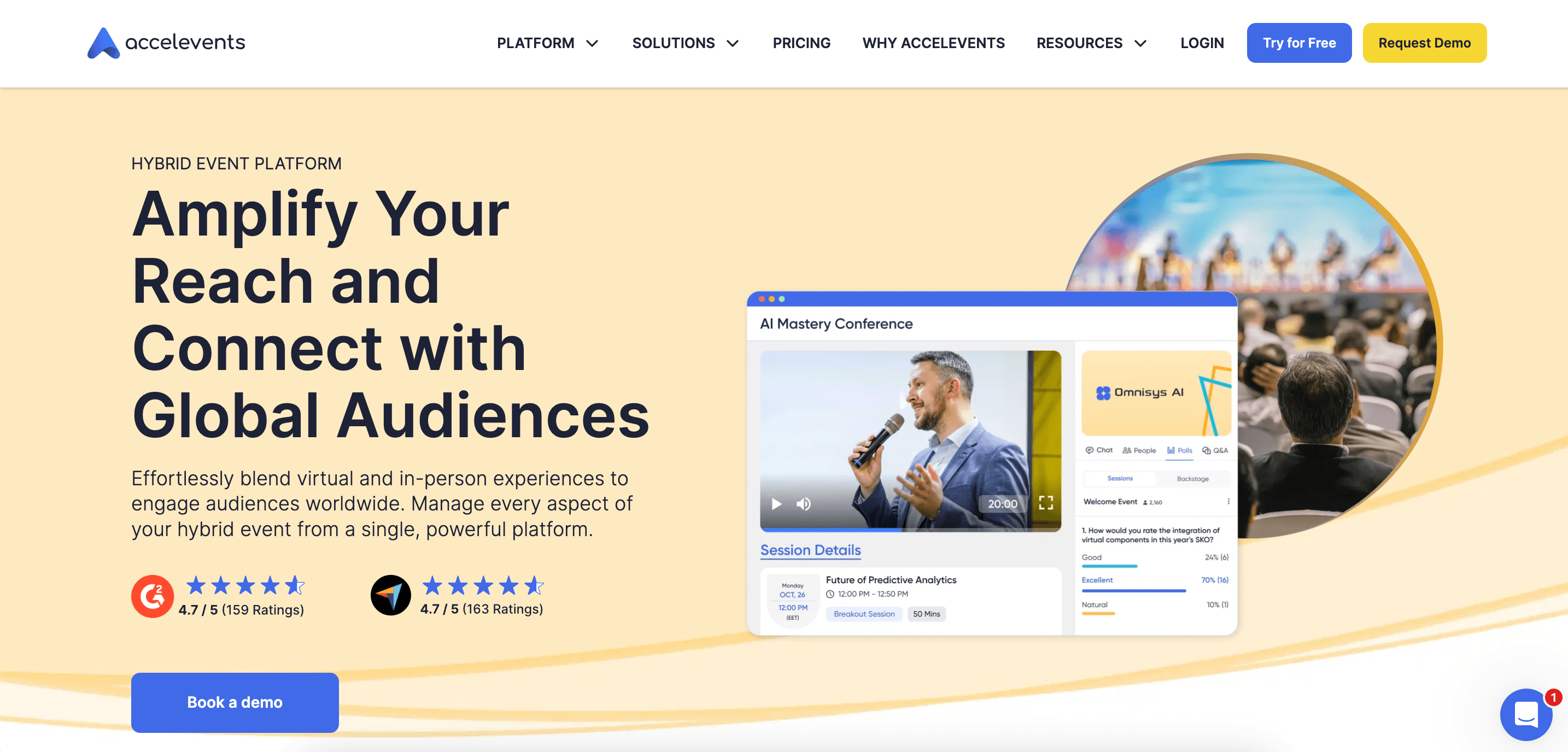
Image credit to Accelevents
Overall score
4.73/5 (340 reviews)
Key Takeaway
Accelevents functions as an agile, all-in-one event management framework engineered to handle physical, virtual, and hybrid events with deep emphasis on ticketing and entry logistics.
Switch Factor
Planners transition to Accelevents to unify their technical stack. It has strong on-site capabilities like on-site badge printing, custom checkout options, and reliable 24/7 customer assistance tools.
vFairs vs. Accelevents
Compared to vFairs, Accelevents prioritizes accessible dashboards to control both in person verifications through check-in and real-time streaming feeds.
Best for
Mid-market event teams and corporate marketing production staff searching for an integrated platform that can handle hybrid events without heavy virtual rendering.
Pros
- Comprehensive built-in technology stack that supports registration and live check-in flows.
- Consistently praised customer support accessibility, offering continuous 24/7 technical chat response times.
Cons
- Lacks specialized niche aesthetics like 3D spatial environments.
- The platform’s standardized formats does not allow for advanced customizations.
Key Features
Integrated registration pipelines, custom badge printing modules, multi-session streaming capabilities, and live attendee analytics dashboards.
Pricing format
Professional flat-rate single-event tiers start at $7,500. Custom enterprise packages require contacting their sales team.
5. Zoom Events
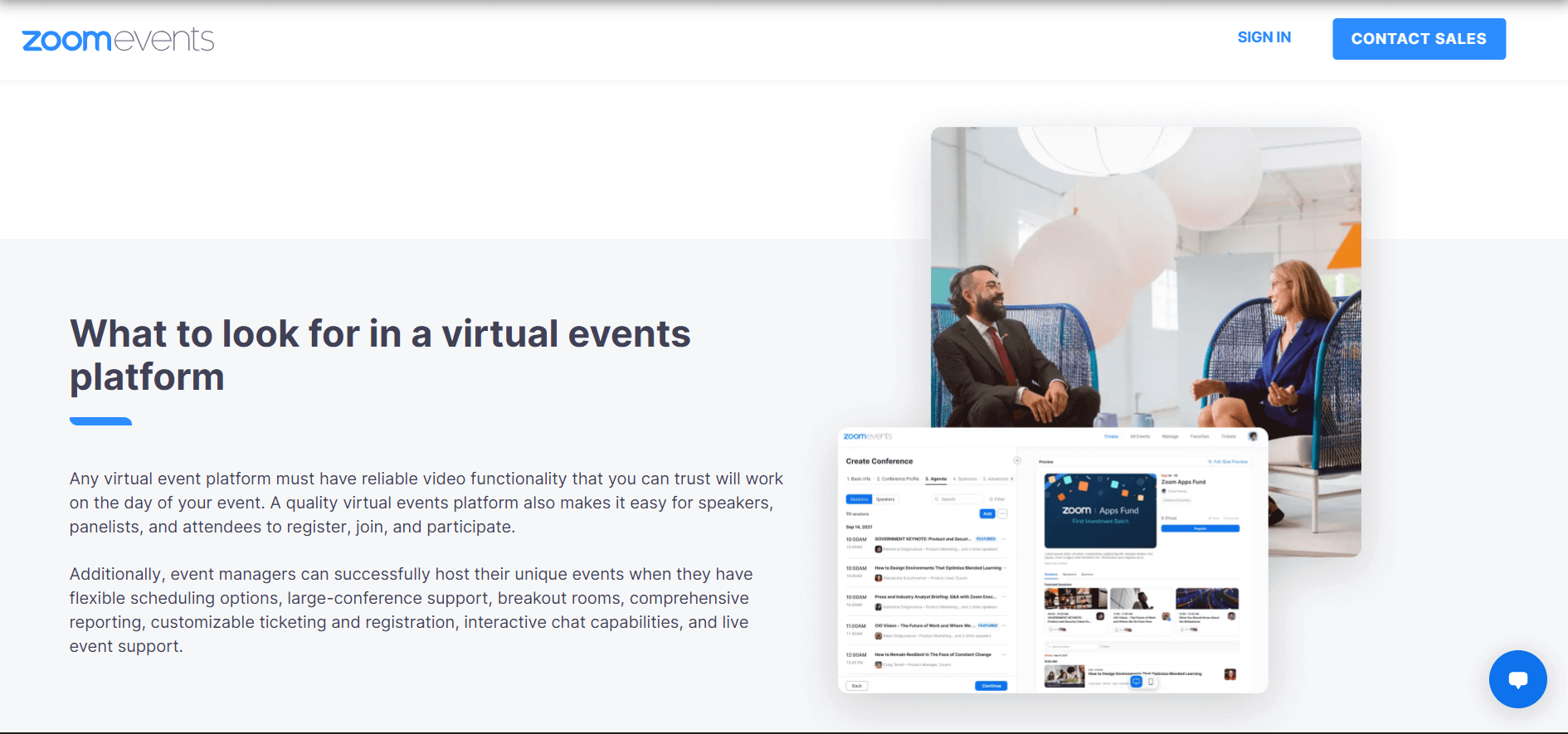
Image credit to Zoom
Overall score
4.4 / 5 (6594 reviews)
Key Takeaway
Zoom Events provides basic event management tools directly above the standard Zoom infrastructure, providing multi-session tracking and virtual ticket control.
Switch Factor
The primary reason to shift to Zoom Events is the elimination of user adoption hurdles. Speakers and attendees are almost universally familiar with the standard interface which can help reduce on-the-spot technical difficulties.
vFairs vs. Zoom Events
Compared to vFairs, Zoom Events utilizes a standardized, clean, grid-based hub that groups Zoom Meetings and Webinars together under a unified registration link.
Best for
Internal corporate events, large public informational webinars, and multi-track meetings that rely heavily on robust streaming.
Pros
- Easy attendee adoption due to the familiar core Zoom user interface.
- Simplified multi-session groupings to gather distinct webinars under a single event landing hub.
Cons
- Visual styling remains highly standardized which offers minimal customizations for session layouts.
- Subscription tiers scale up significantly in pricing as the number of attendees grows.
Key Features
Unified event hub directories, tiered registration ticketing options, virtual booth setup, networking lobby messaging groups, and direct integration with existing corporate Zoom subscriptions.
Pricing format
For events, tiers start at $415 per month billed annually. Depending on the number of attendees and plan format, the prices will fluctuate.
6. Sched
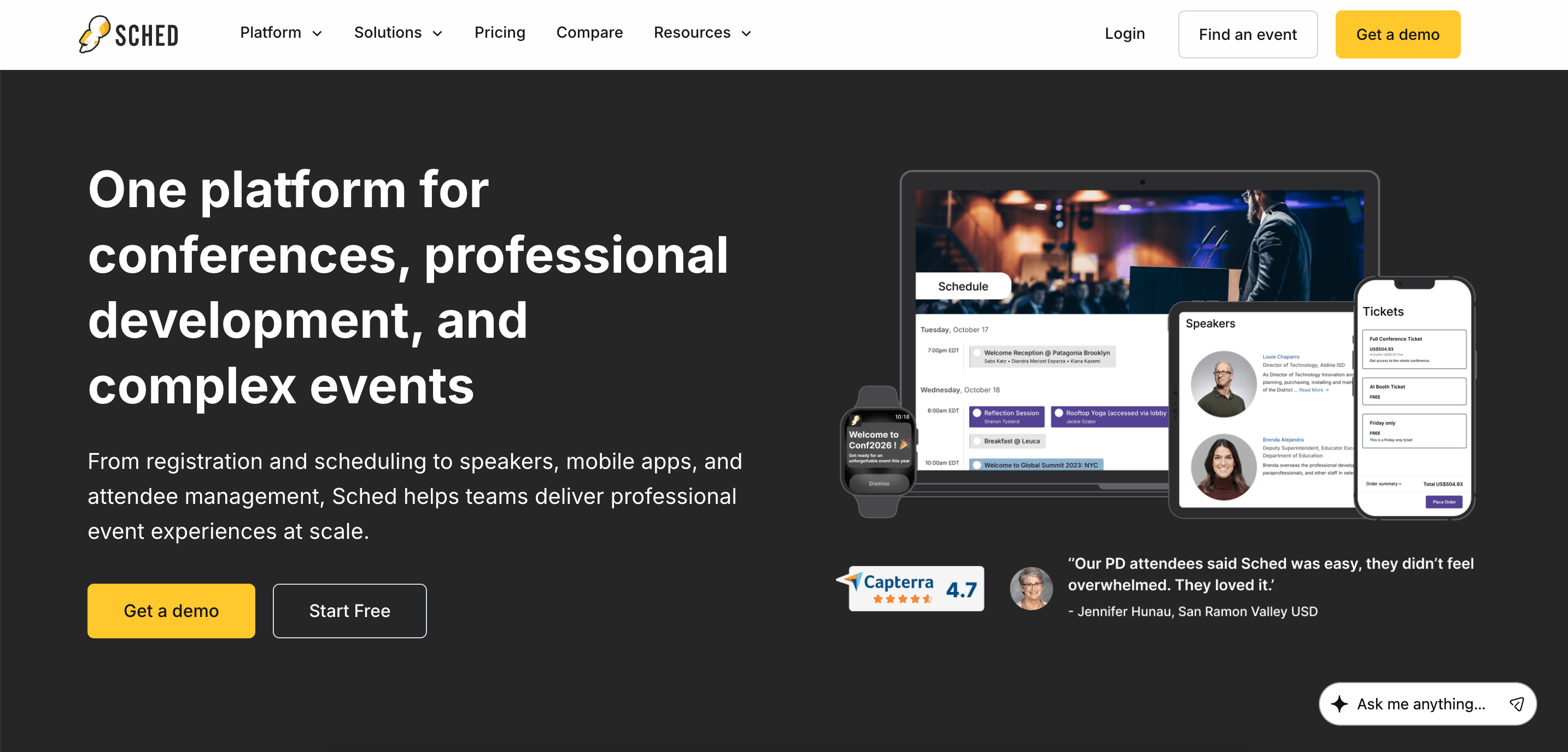
Image credit to Sched
Overall Score
4.7 / 5 (123 reviews)
Key Takeaway
Sched provides a clean, agenda-focused scheduling application designed to transform complex, multi-track conference itineraries into highly legible directories.
Switch Factor
Event managers choose Sched to reduce setup friction. Its straightforward layout approach eliminates the need to manage heavy graphical floor plans or elaborate 3D structures, prioritizing faster scheduling instead.
vFairs vs. Sched
Compared to vFairs, Sched centers everything around a highly structured interactive timetable, allowing attendees to build customized daily tracks in seconds.
Best for
Academic workshops, community educational festivals, and corporate meetings where layout clarity and itinerary management are the top priorities.
Pros
- Rapid onboarding that lets organizers upload thousands of session tracks via standard spreadsheets in minutes.
- Simple user directory layouts that allow attendees to quickly construct personal schedules.
Cons
- Minimal native virtual streaming capabilities that require third-party integrations.
- Lacks advanced monetization features like comprehensive sponsor booths or commercial lead tracking engines.
Key Features
Interactive multi-track session schedules, rich speaker profile management, instant PDF timetable generation tools, and native calendar syncing.
Pricing format
Offers transparent usage-based annual commitments starting at $600/per event (Launch) up to $2,250/per event (Ultra).
7. Webex Events

Image credit to Webex Events
Overall Score
4.48 / 5 (8602 reviews)
Key Takeaway
Webex Events (formerly Socio) provides an enterprise-grade event management platform that combines scalable attendance tools, deep analytics data, and reliable corporate security standards.
Switch Factor
Organizations switch to Webex Events when their primary goal shifts from virtual environmental novelty to rock-solid data streaming stability and deep corporate ecosystem compatibility.
vFairs vs. Webex Events
Compared to vFairs, Webex Events relies on modern, dashboard-centric event apps that enhance cross-device messaging, live engagement, and session interactivity.
Best for
Enterprise corporations, large-scale technology associations, and security-focused organizations that require deep system integrations.
Pros
- Seamless infrastructure integration with the broader Cisco hardware and enterprise software product ecosystems.
- Exceptionally strong engagement capabilities including customizable live gamification challenges and notification systems.
Cons
- Enterprise-focused workflows can introduce excessive configuration settings for smaller events.
- Premium enterprise features can push the overall deployment budget significantly higher than mid-market options.
Key Features
Customizable mobile apps, real-time engagement gamification features, digital ticket registration pages, and secure high-capacity video streaming.
Pricing format
Public pricing schedules are not displayed on the official website. Contact their sales team for a custom quote.
8. ON24
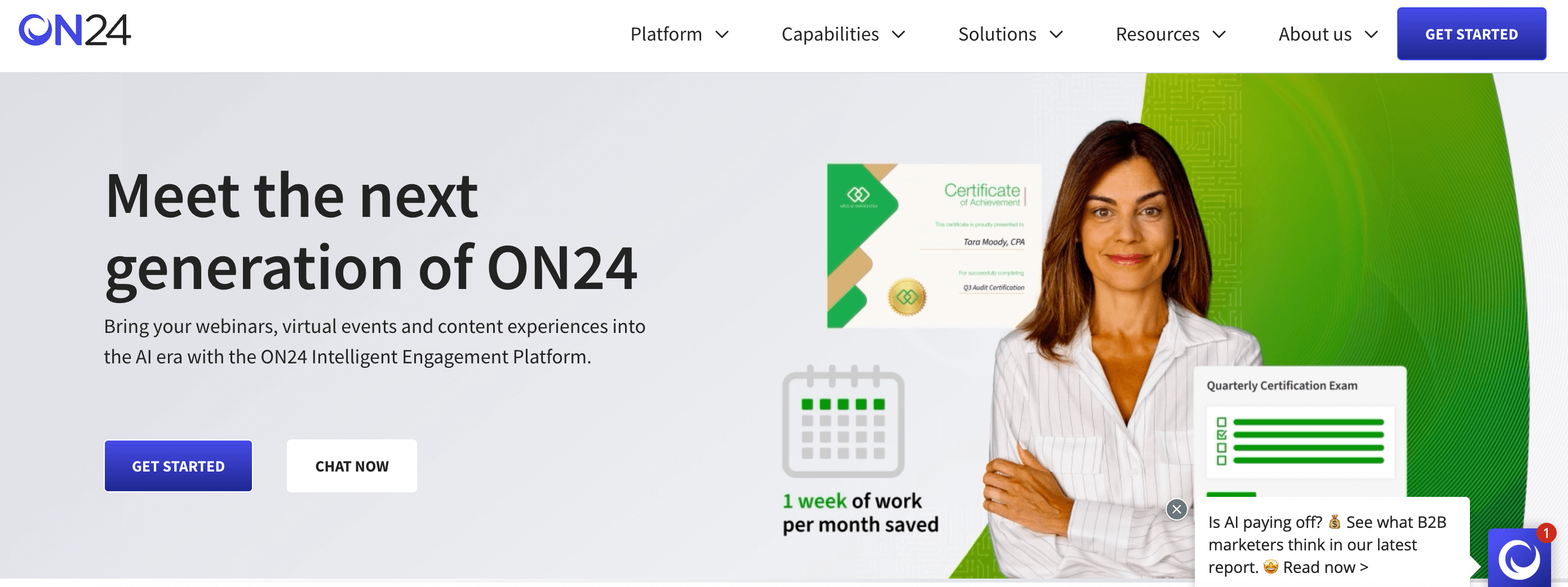
Image credit to ON24
Overall score
4.3/5 (1971 reviews)
Key Takeaway
ON24 provides high-end enterprise webinar and content hub platforms created specifically for B2B marketing funnels and tracking deep user interaction metrics.
Switch Factor
Corporate marketing teams select ON24 when they want to move past general attendance data and capture precise buyer interest signals that sync directly into other marketing platforms.
vFairs vs. ON24
Compared to vFairs, ON24 builds content hubs and AI-driven personalized content designed to convert webinar attendees into qualified sales leads.
Best for
Enterprise B2B corporations maintaining consistent demand-generation programs and ongoing digital marketing campaigns.
Pros
- Deep enterprise behavioral analytics data points that map real-time attendee signals directly into CRM frameworks.
- Persistent on-demand media library hubs equipped with automated, AI-driven content recommendation paths for continuous generation.
Cons
- Initial implementation often demand coordination between internal IT teams.
- High-entry subscription fees position the platform strictly as an enterprise-scale commitment for high-volume corporate organizations.
Key Features
AI-driven personal content recommendation engines, persistent on-demand resource hubs, advanced marketing analytics, native integrations with major marketing automation platforms, exhibit halls, and speakers gallery.
Pricing format
Contact sales team for custom quote for enterprise packages.
Which vFairs Alternative is Right for You?
Choosing an alternative system requires matching your primary event needs with the platform’s capacity. For persistent 3D trade shows, platforms like HexaFair offer a direct structural alternative. For high-volume enterprise B2B marketing pipelines, ON24 is highly optimized. For user-friendly hybrid conferences and deep audience engagement, Whova is often chosen for its ease of use and cost-effectiveness. For large corporate events, Webex Events and ON24 remain strong enterprise considerations. For scaled conferences, Whova may be more cost-effective. Whova continues to be one of the highest-rated vFairs alternatives, maintaining a 4.8/5.0 rating across more than 5,000 verified event organizers.
Click here to request a free live demo for Whova.
Frequently Asked Questions (FAQs)
Why do event organizers evaluate alternatives to vFairs?
Organizers often seek alternatives due to the heavy set up time required to build custom 3D layouts, a steep learning curve for non-technical speakers, and a desire for more robust, native mobile app functionality.
Which vFairs competitor provides the strongest mobile app functionality?
Whova is widely recognized for its mobile-first design, providing active community boards, direct attendee-to-attendee messaging, and live mobile check-in capabilities that run seamlessly alongside desktop virtual components.