
By: Whova Team | Last Updated: August 20, 2026

A seasoned event manager has extensive experience with the countless details and careful planning that go into executing a flawless event. Skilled event planners always have a selection of beneficial tools on hand to ensure that their events go off without a hitch.
In simple language, “PM tools” are a variety of paid or free project management programs that one can download and use. With countless tasks such as registering attendees, handling event logistics and writing a post event report, you’ll need a reliable tool on your side. Event project management tools come to the rescue to help individuals or teams efficiently manage their projects and tasks!
On the other hand, is it also possible to ditch the stressful part of event project planning. Wondering how?
When it comes to organizing events smoothly, the list of beneficial tools is very long. In this post, we have reviewed the 9 best tools for event project management.
Event Project Management Software Comparison
Key Takeaways
- For All-In-One Logistics: Whova is able to combine registration, attendee engagement, and project management into a single hub.
- For Team Communication: Basecamp and Slack can help replace messy email chains with organized discussion channels.
- For Inbound Event Marketing: HubSpot connects project tasks directly to CRM profiles and automated email workflows.
- For Visual Task Tracking: Trello and Asana offer visual card boards and flexible task lists for team workflows.
- For Enterprise Workloads: Wrike and ProjectManager.com handle complex team capacity planning, Gantt schedules, and financial tracking.
Why Do Event Teams Need Specialized Project Management Software?
Generic spreadsheets and email chains were never designed to manage high-stakes event timelines. Spreadsheet rows do not send alert notifications when vendor contracts are due. Long email chains hide critical setup changes right when you need them most.
Working across disconnected spreadsheets creates duplicate files and costly errors. For example, someone updates an old vendor file, a sponsor logo gets left off the printed banner or two volunteers order catering from different menus. As the event start date gets closer, organizers don’t want to waste hours chasing down staff members just to get basic status updates.
Specialized event project management software can help keep your entire team working from the same shared roadmap. It helps remove guesswork, assign clear task owners, and automate deadline reminders so nothing gets missed.
- Centralized Task Tracking: Store every vendor agreement, speaker presentation, and venue contract in one accessible location.
- Automated Accountability: Use automated email notifications and weekly summaries so leaders do not have to manually chase down team updates.
- Reduced Administrative Work: Eliminate repetitive data entry by handling attendee registration, mobile apps, and badge printing in one single place.
How Should You Compare Event Project Management Tools?
Planners often struggle to separate general office tools from software built for actual event execution.
Selecting a platform that is too complicated can backfire. If your team or external volunteers find the software confusing, they will stop logging in. You end up wasting money on software while your team quietly slips back to disorganized spreadsheets.
Focusing on five simple criteria helps non-technical event teams evaluate software quickly and make a confident choice:
- Ease of Adoption: Can non-technical team members, volunteers, and committee leads start using the platform within minutes without attending long training sessions?
- Event-Specific Features: Does the platform offer pre-built event task checklists, or are you forced to spend hours creating every checklist item from scratch?
- External Collaboration: Can external vendors, temporary staff, and board members access assigned tasks without the main admin dashboard?
- Communication & Reminders: Does the tool send automated deadline alerts and dynamic weekly summaries to keep staff accountable without extra meetings?
- Cost & Flexibility: Is the pricing structure clear and cost-effective for your specific event frequency, whether you host one annual conference or weekly chapter meetings?
9 Best Event Project Management Tools
1. Asana
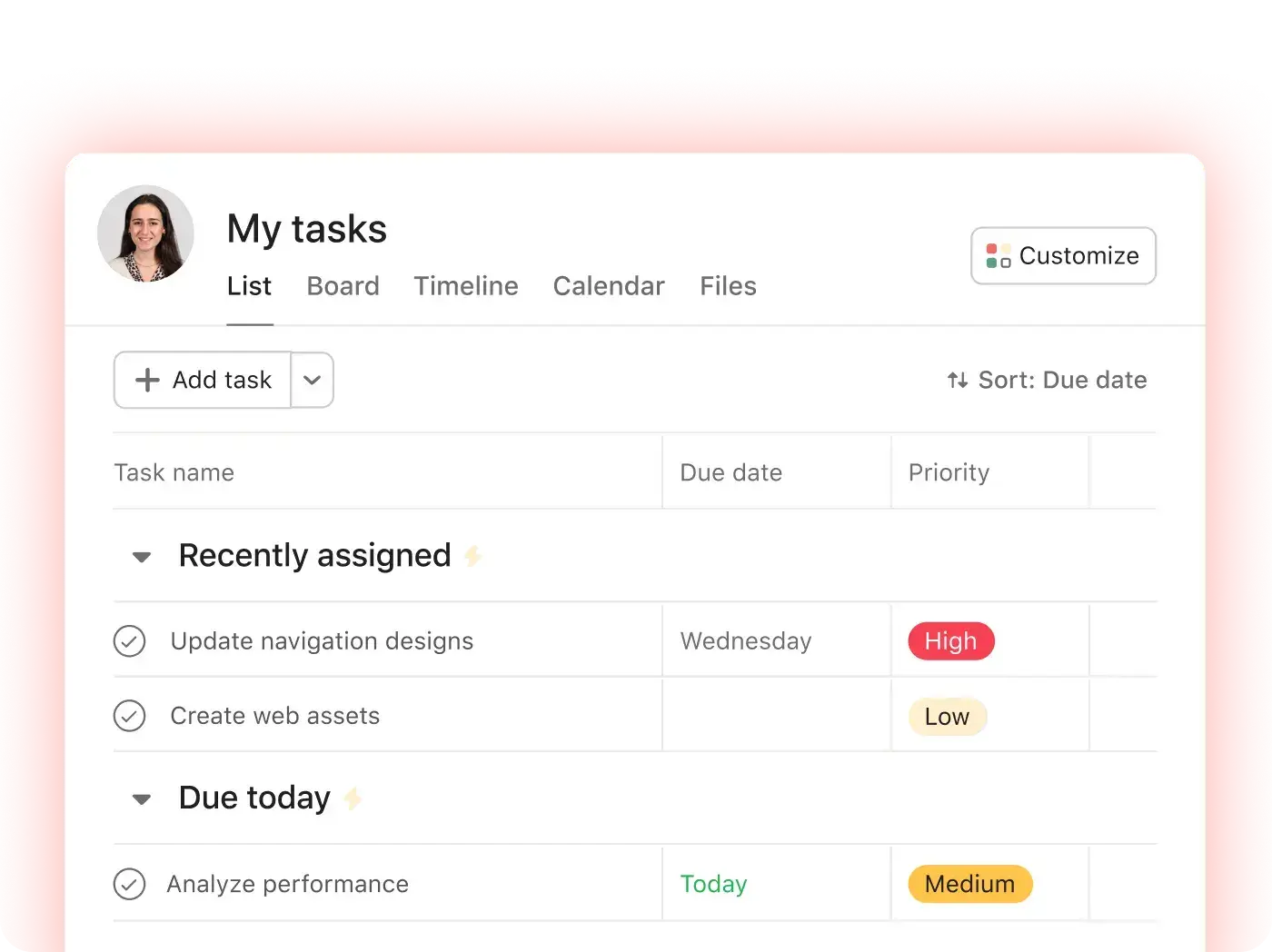
Image credit to Asana
Asana is an excellent option if you like Kanban boards but need more freedom. For all of your event project management needs, choose Asana, which integrates the most remarkable features of Kanban boards with task management.
You may set up group work, delegate responsibilities, and monitor the status of your projects in real-time with the help of user reports.
You can keep tabs on and organize your projects even on the day of the event with Asana’s mobile app and real-time updates. You may learn much about your team’s performance from the user reports and the customizable viewing options.
Best For
Corporate marketing teams managing recurring events across internal departments.
Key Features
- Flexible task views including List, Board, and Timeline Gantt views.
- Enables task assignment to team members.
- Task dependency markers that flag when delayed vendor steps will impact future tasks.
- Milestone markers for tracking critical event dates.
Pros
- Excellent for managing complex task dependencies across multiple departments.
- Responsive mobile app for updating task status on the go.
Cons
- Requires manual creation of every event checklist and milestone from scratch.
- Higher learning curve.
Pricing
Free basic tier; Starter plan begins at $10.99/user/month.
2. Monday.com
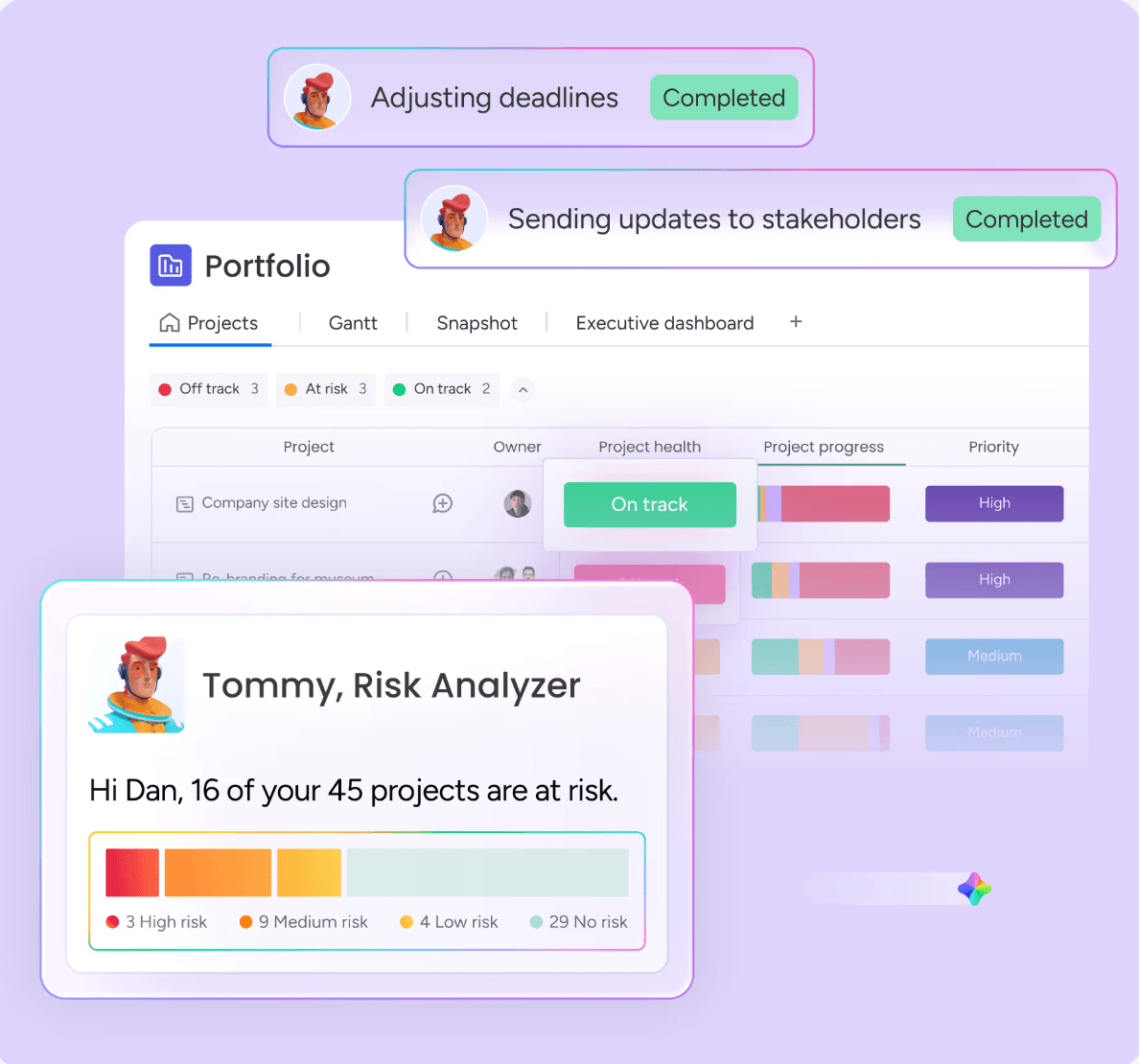
Image credit to Monday.com
Monday.com is a versatile event project management platform that aids with event coordination and management. Teams may collaborate on budgeting, vendors, operations, event management, and advertising using the platform’s specialized event planning tools.
By delegating responsibilities, team members can easily track who is working on what and what is most pressing. Work with other groups in your company to ensure everyone can obtain the information they need for the event.
Best For
Corporate teams that want custom workflow boards and visual status tracking.
Key Features
- Color-coded status columns for instant visibility into task progress.
- Automated email alerts triggered when a task status changes to “Stuck” or “Done”.
- AI-assisted deadline tracking that highlights approaching milestones.
Pros
- Visually engaging and highly customizable for corporate workflows.
- Strong library of third-party platform integrations.
Cons
- Requires a minimum seat purchase, which increases costs for small teams.
- Email alerts could be overwhelming depending on the setting.
Pricing
Basic plans start at $9/user/month (minimum 3 seats required).
3. Whova
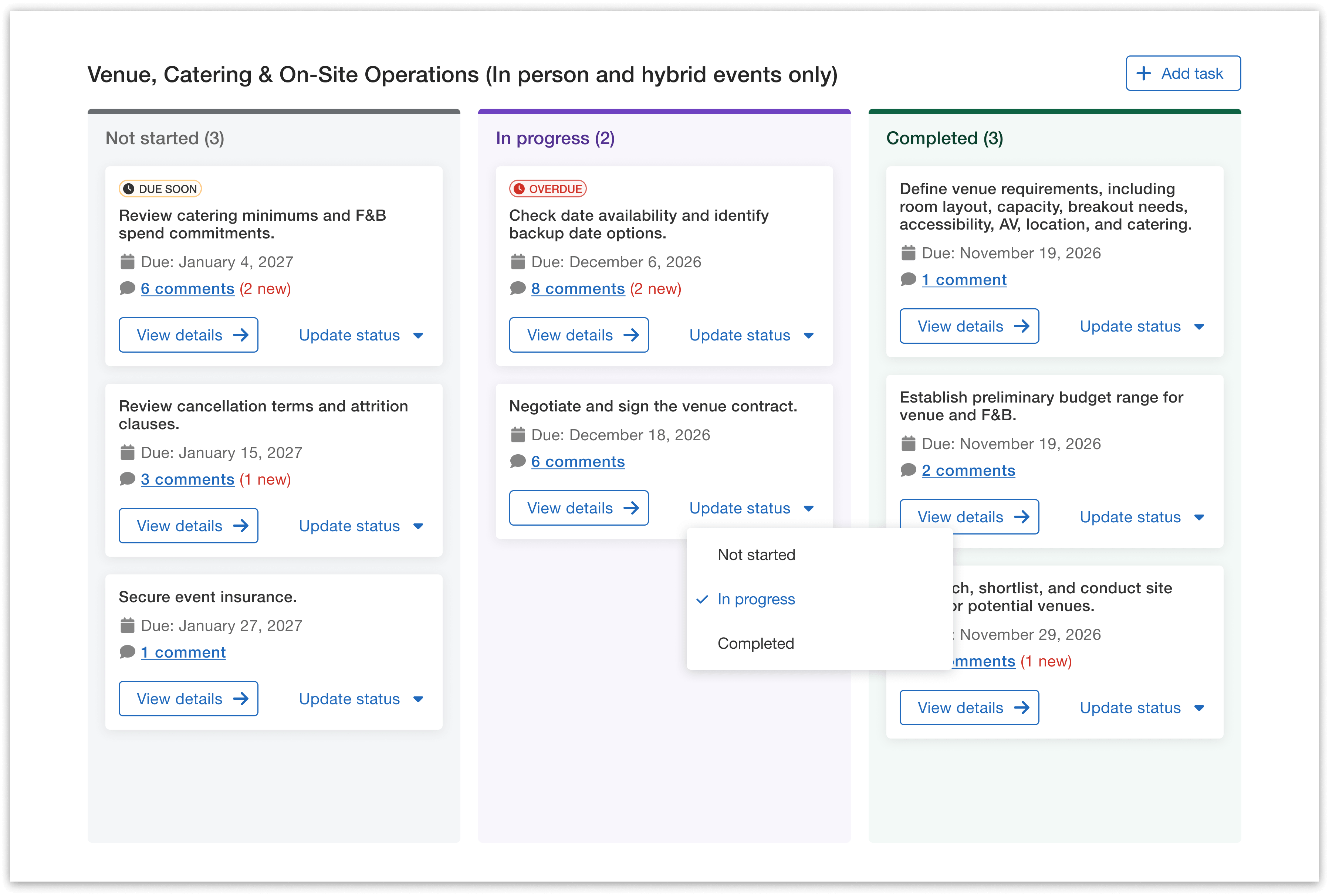
Whova is an all-inclusive event project management platform with an extensive range of features when managing and organizing events.
Organizers may effortlessly track tasks, handle event registration, make individualized agendas, and communicate event updates to participants with its user-friendly interface. Participants can also take advantage of Whova’s networking features to make new connections, plan meetings, and join in on group conversations.
Best For
Conferences, association meetings, trade shows, and expos looking for an all-in-one hub that handles project management, registration, agenda scheduling, vendor management and document management.
Key Event Project Management Features
- Project Management Portal: A centralized workspace where event managers, team members, and external volunteers review assignments, update task progress, and share documents.
- Pre-Built Event Checklists: Generates tailored event projects and checklists based on your event structure, covering speaker outreach, venue contracts, and sponsor deliverables.
- Automated Reminders & Weekly Digests: Sends automatic deadline alerts to task owners and delivers a concise weekly status digest to event leaders.
- Dedicated External Workspace: Allows external volunteers, committee chairs, and vendor leads to manage assigned tasks without accessing main account settings.
- Comprehensive Event Management Tools: Allows organizers to work on specific tasks such as registration, name badge printing, attendee management or vendor management in the same platform.
Pros
- Pre-configured event task roadmaps save hours of manual setup.
- Unified setup eliminates the need to pay for separate project management, registration, and app tools.
- Great customer support and ease of use.
Cons
- Focuses on structured event layout templates rather than open custom code modifications.
Pricing
- Flexible per-event pricing based on event needs.
4. BaseCamp
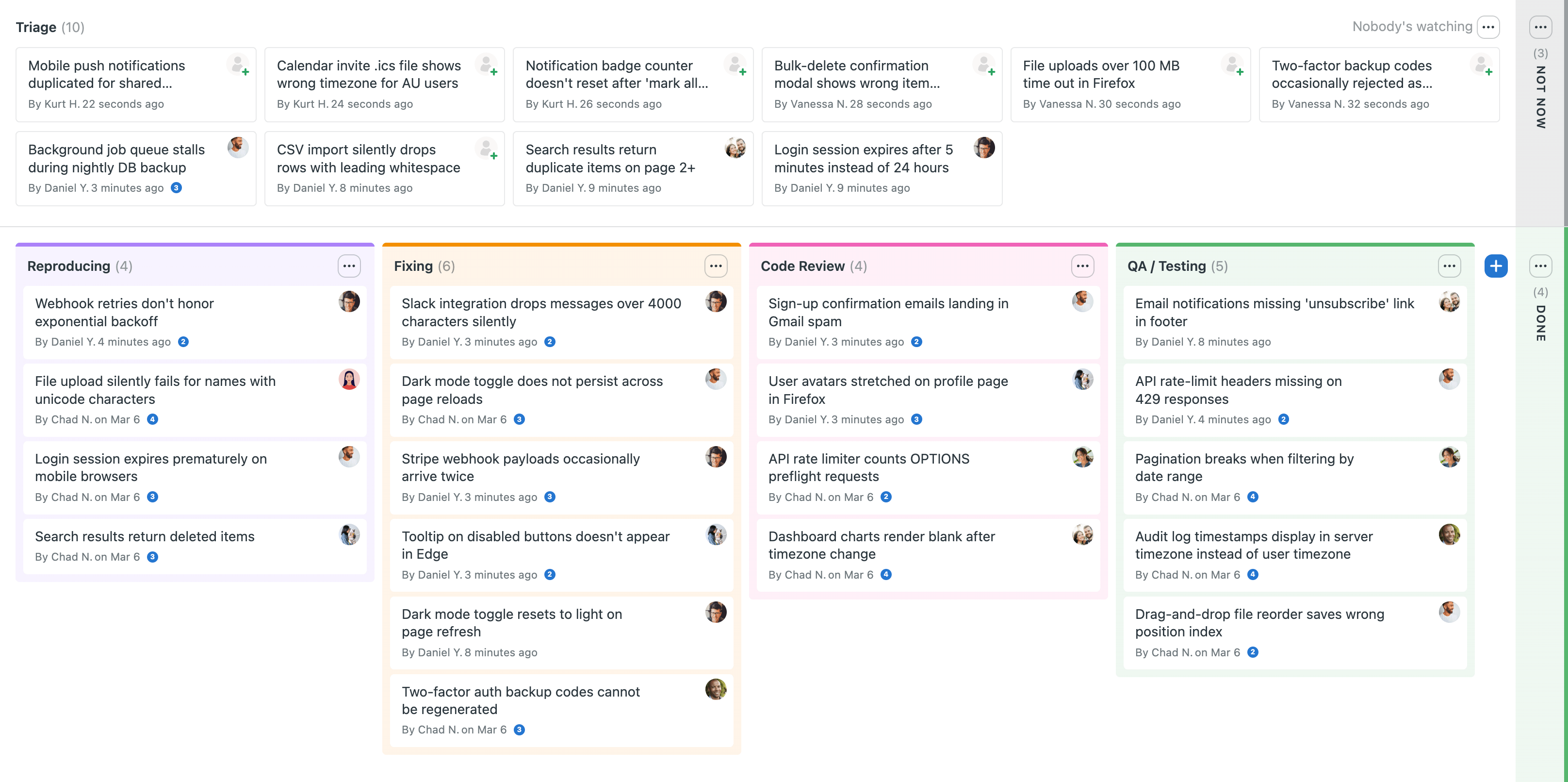
Image credit to BaseCamp
BaseCamp is an easy-to-use platform for managing projects and facilitating communication. You can keep your team apprised of progress on certain parts of the project or event by keeping tabs on discussions and assignments. Basecamp ensures everyone is on the same page by sending out notifications and assigning tasks.
Using it, event organizers can make projects, delegate responsibilities, and monitor development, all from a single dashboard. Basecamp is An excellent event project management application with an easy-to-understand UI and many valuable features.
Best For
Small teams and non-profit committees seeking a tool to handle messages team discussions and task tracking.
Key Features
- Message boards that organize team conversations by topic instead of buried emails.
- Clear to-do lists with simple drag-and-drop task assignments and due dates.
- Centralized document storage for sharing floor maps and vendor contracts.
Pros
- Uncluttered layout that non-technical staff can learn in minutes.
- Flat monthly fee options make software costs predictable for growing teams.
Cons
- Does not include pre-built event task checklists or built-in registration features.
Pricing
Free for 1 project. Different tiers with more projects starting with $25/month.
5. Trello
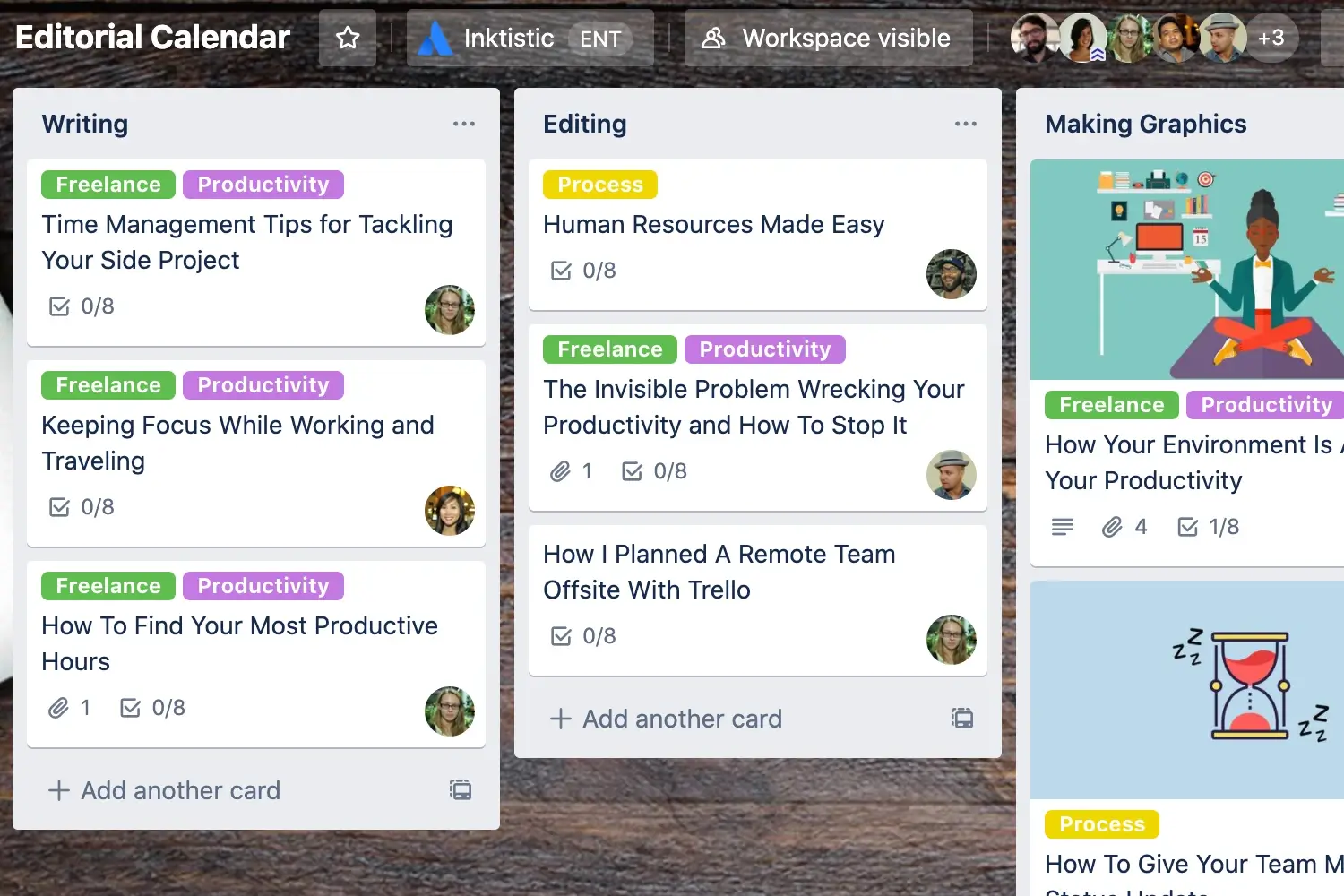
Image credit to Trello
Trello is an open-source project management tool that facilitates productive teamwork.
Every person on the team can see what they must be doing, when, and who is responsible for it when tasks are organized on a shared board. You may link your whole event management process from beginning to end with its integrations with other technologies.
Best For
Visual planners managing small events or quick marketing checklists.
Key Features
- Drag-and-drop card boards for simple stage-by-stage tracking.
- Individual task cards containing sub-task checklists, file attachments, and due dates.
- Butler automation rules that automatically move cards when deadlines hit.
Pros
- Highly intuitive card layout that takes zero training to understand.
- Free starter tier works well for small planning boards.
Cons
- Can feel cluttered and hard to navigate when managing hundreds of event tasks simultaneously.
- May lack more complex project management features such as financial tracking.
Pricing
Free plan available; paid plans start at $5/user/month.
6. Slack
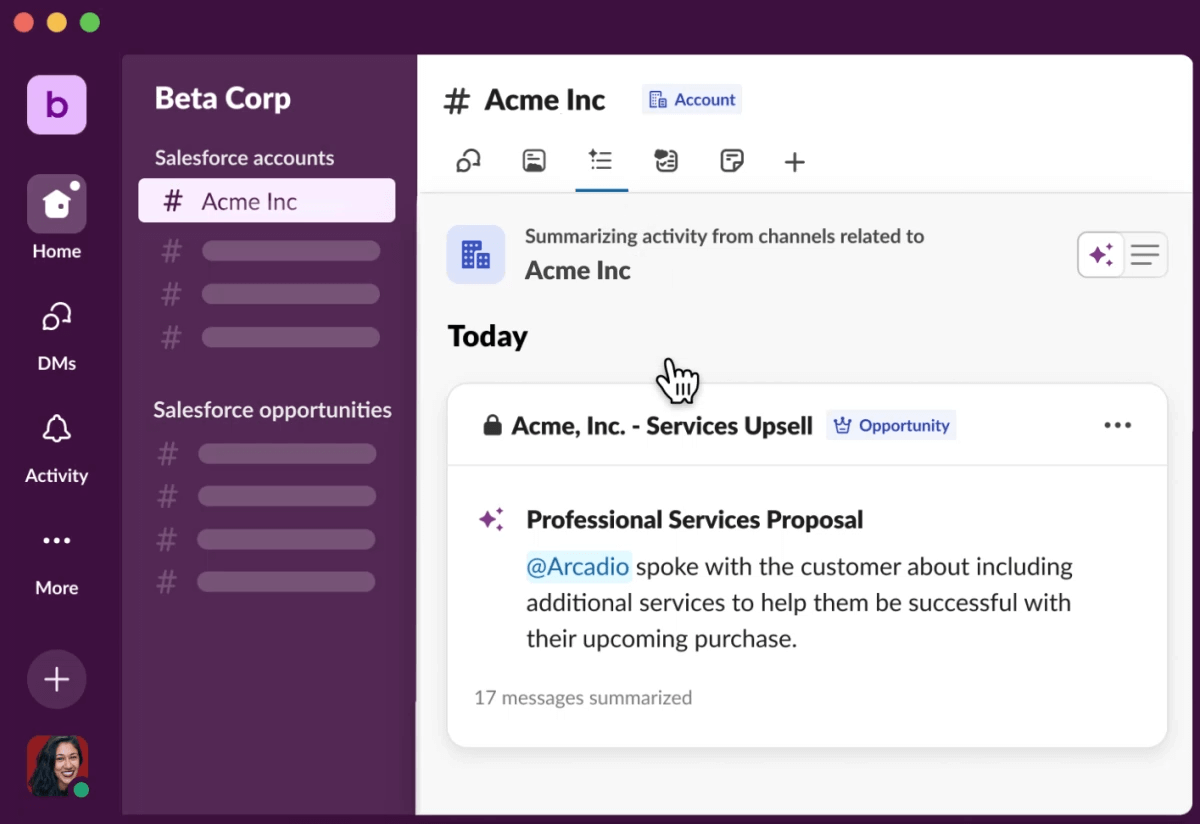
Image credit to Slack
Slack is an efficient and user-friendly platform for team communication that allows you to group your messages into chains. You can categorize topics according to the big picture of the event or more specific tasks (such as food or design). Slack facilitates effective communication among employees, vendors, and clients through file sharing, instant messaging, and interaction with other tools.
Best For
Fast real-time messaging among event staff, committee leads, and onsite teams.
Key Features
- Organized chat channels for specific topics like #venue-logistics or #sponsors.
- Instant direct messaging and file sharing for quick onsite decisions.
- Integrations with major cloud storage platforms, calendar tools and third party tools.
Pros
- Speeds up day-to-day team communication during active planning phases.
- Searchable chat archive helps team members find past decisions quickly.
Cons
- Works mainly as a messaging tool, requiring pairing with a project checklist platform or custom workflows for better organization.
Pricing
Free basic plan; paid tiers start at $8.75/user/month.
7. Wrike
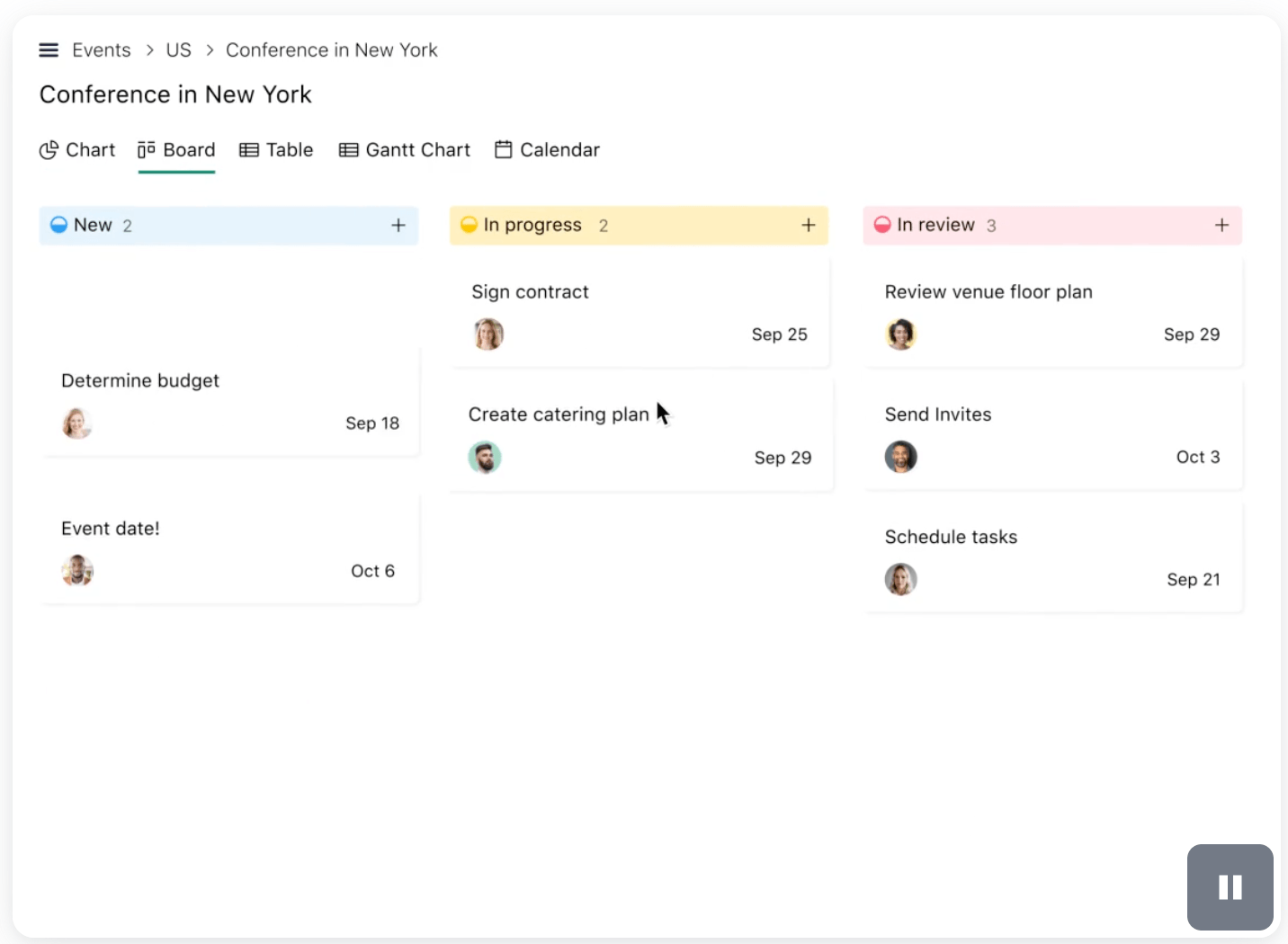
Image credit to Wrike
To make sure that everyone on your event team is getting their fair share of work done, Wrike’s resource management features are the best. Assign responsibilities wisely as the big day approaches with the help of this handy event project management tool.
Viewing options include Gantt-like charts and Kanban boards so that you may pick the best one for your tasks.
It comes with event planning templates that let you keep track of deadlines, coordinate shared calendars, monitor budgets, and progress on visual boards.
Best For
Larger organizations and event agencies managing multiple overlapping event projects.
Key Features
- Interactive Gantt charts for mapping complex multi-team schedules.
- Resource allocation views for tracking individual staff workload capacity.
- Customizable request forms for handling incoming event requests.
- The mobile app makes tasks accessible on the go.
Pros
- Outstanding capacity management and team workload tracking tools.
- Capable of handling complex multi-department dependencies.
Cons
- Steeper setup curve for casual or non-technical event planners.
Pricing
Free plan available; Team plan starts at $10/user/month.
8. HubSpot
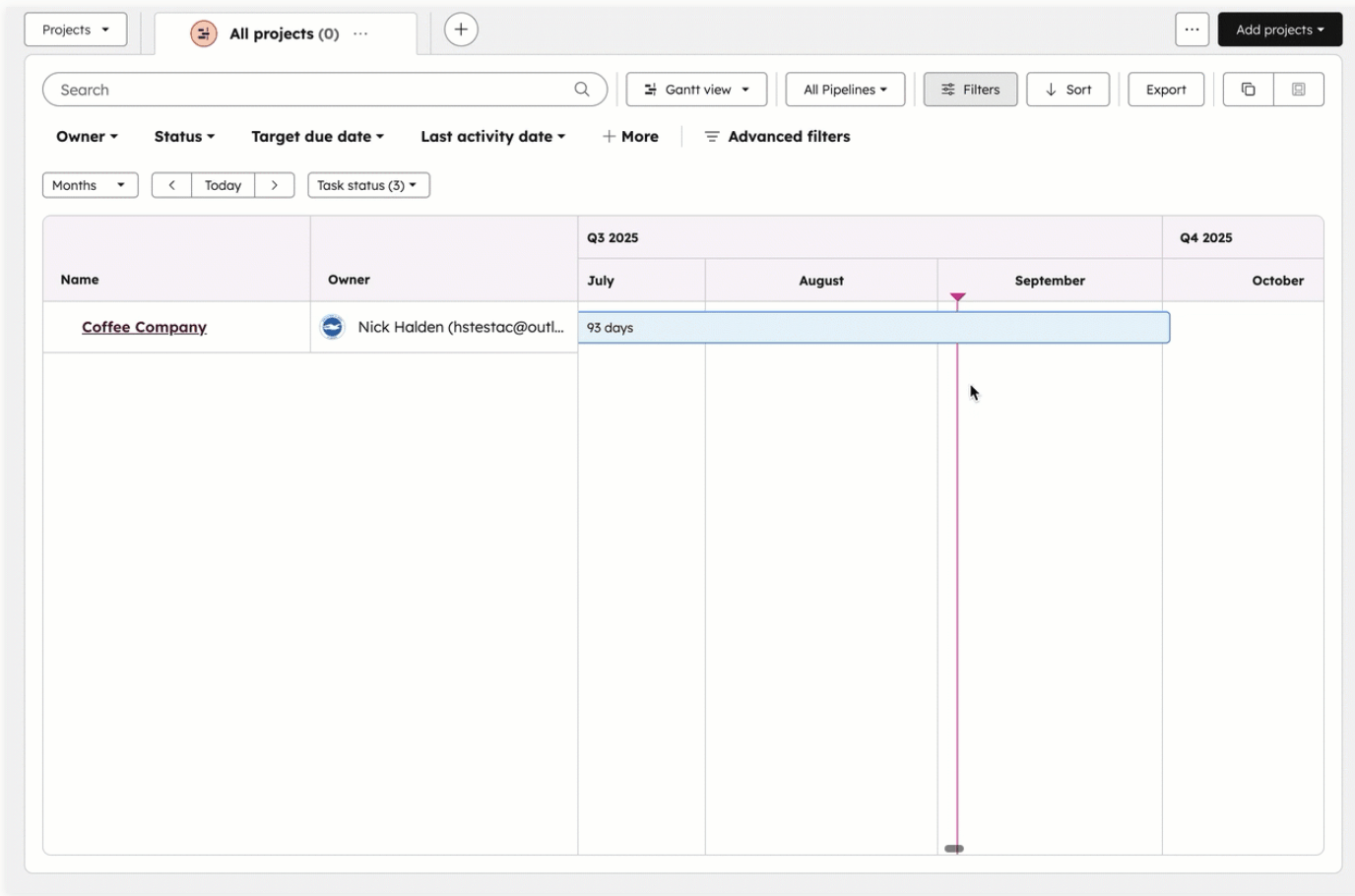
Image credit to Hubspot
As a CRM tool, HubSpot tracks client or prospective customer interactions and leads. With the help of this event project management tool that focuses on customer relationships, you can manage your contacts, make lists, and discover more about the likes and hobbies of your target customers.
HubSpot will allow you to balance your relationships with your present customers. It also increases the chances of building better relations with potential clients. The credit goes to its marketing features, service, and smooth operations. It is also one of the widely used software for event registration.
With HubSpot, learn more about your target audience and connect deeply. As a result, you will have a more extensive customer base and greater loyalty!
Best For
Corporate marketing teams running inbound event campaigns who want task tracking tied directly to lead generation.
Key Features
- Projects workspace with Gantt timeline views for mapping marketing tasks.
- Marketing events tracking that logs attendee registration and engagement.
- Automated email workflow triggers based on registrant form submissions.
Pros
- Unifies event task tracking with CRM lead nurturing and reporting process.
- Excellent built-in templates for email promotion and landing pages.
Cons
- Lacks dedicated onsite event logistics tools like badge printing or kiosk check-in.
Pricing
Free tier available; Marketing Hub plans start at $10/user/month, with Professional tiers scaling higher.
9. ProjectManager.com
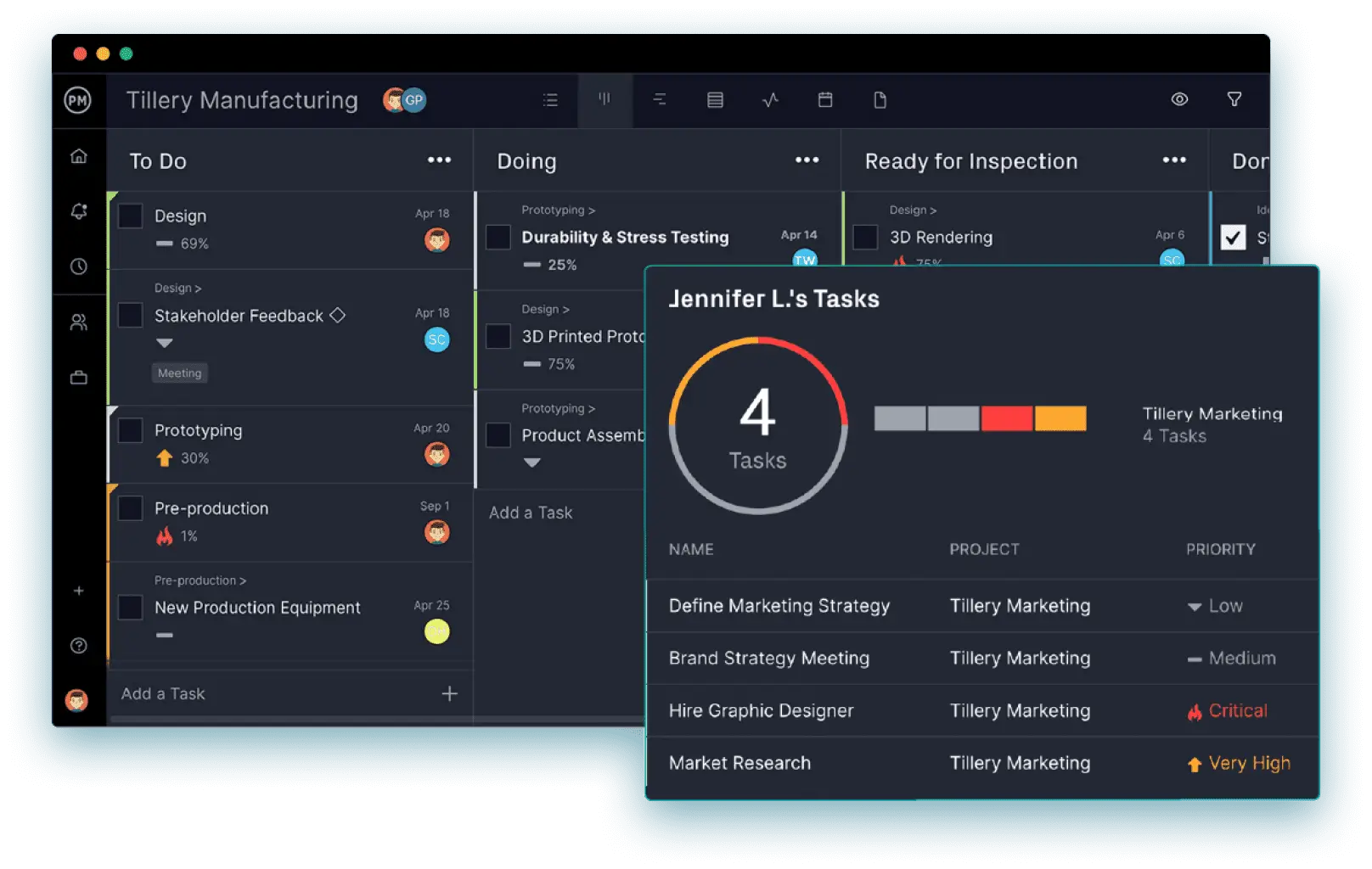
Image credit to ProjectManager
ProjectManager.com is a project management tool that combines interactive Gantt charts, timesheet tracking, and event budget management.
Complex multi-day conferences involve tight scheduling constraints and strict budget limits. To avoid small schedule slips or unmonitored vendor expenses, ProjectManager.com combines interactive timeline scheduling with real-time budget tracking to align costs and schedules.
Best For
Project managers overseeing large-scale events with strict budget reporting requirements.
Key Features
- Interactive Gantt charts for master schedule planning.
- Real-time budget tracking and vendor expense reporting.
- Team timesheets for monitoring task effort and hours logged.
Pros
- Strong combination of timeline scheduling and expense tracking.
- Multiple workspace views including Gantt, Board, and List.
Cons
- Interface can feel overly technical for casual event coordinators.
Pricing
Team plan starts at $15/user/month with higher Business and Enterprise tiers.
Final Words
As we mentioned in the beginning, event management is not an easy task. You can keep track of everything essential for a successful event with the help of tools for event project management. Managing agendas, speakers, and payments are just a few of the features covered by the top 9 tools for event project management reviewed in this article. You no longer need to worry about hefty spreadsheets or misplacing your staff or attendees.
Those were shortcomings of the past. With the help of these top 9 event project management tools, you can organize, promote, execute, and evaluate the perfect event.
If you need more specific software to manage tasks such as website creation, online registration, and mobile event app, consider all-in-one event management tools such as Whova that may assist you in organizing memorable events.
Frequently Asked Questions
What is the difference between generic project management software and event project management software?
Generic project management tools (like Trello or Asana) track basic task lists but require you to build every checklist and workflow from scratch. Specialized event project management software (like Whova) includes pre-built event task roadmaps and allows you to directly work on attendee registration, event mobile apps, check-in, and badge printing in the same platform.
Can I use free tools like Google Sheets or Trello for event project management?
Free tools work well for small, simple events with few moving parts. However, as events grow in size, manual spreadsheets lead to version control issues, buried email updates, and missed vendor deadlines. Moving to a dedicated event project management software could save hours of manual administrative work and prevent costly event-day errors.
How does Whova’s Project Management Portal help event teams stay on track?
Whova’s Project Management Portal generates pre-made event task roadmaps based on your event structure, sends automated email reminders for approaching deadlines, and delivers a dynamic weekly status digest to event leaders. It also provides a dedicated workspace for external committee members and volunteers, keeping everyone accountable in one central hub without giving away main account controls.