
Author: Whova Team | Last updated: July 6, 2026
When you’re exploring alternatives to Swoogo in 2026, it’s important to look for a platform that combines flexible registration tools with strong end-to-end event management capabilities. A visually polished registration page is only valuable if it connects smoothly with the rest of the event workflow, including on-site operations, data tracking, and post-event reporting.
In practice, challenges often arise when teams rely on disconnected tools that don’t share data effectively. This can lead to gaps between registration information and the rest of the event, making it harder to manage attendees consistently across the event lifecycle. This guide offers an overview of leading event management platforms competing with Swoogo in 2026, focusing on their core strengths and key differences.
What Can Swoogo Do To Help Your Event Planning Process?
There are various ways Swoogo can be used in event planning, including:
- Event Registration & Ticketing: Swoogo makes creating customizable registration forms easy, offering multiple ticket types and tracking attendee sign-ups in real time.
- Attendee Management: Users can track attendee information, send automated confirmations, and generate reports to analyze participation trends.
- Custom Event Websites: Event organizers can create visually appealing event webpages with branding, details, and embedded registration forms.
- Hotel Booking Management: The platform integrates hotel booking options directly into the registration process, making it easier for attendees to secure accommodations.
- Multi-Language Support: Swoogo supports translations in Dutch, French, German, Portuguese, Spanish, and Chinese, making it accessible for international events.
Which Swoogo Alternative Is Right for Your Event Goals?
Organizers shouldn’t select event software based on just single features since some platforms can results in additional costs, manual data transfers, and added complexity during the final stages of event preparation.
Choosing a platform that aligns with the core goals and structure of the event from the beginning helps reduce these issues and creates a smoother planning and execution process.
| Your Goal | Recommended Alternative | Why it Wins |
| All-in-One Management & Networking | Whova | Full event cycle management tools for registration, check-in, analytics, and engagement. |
| Enterprise Level Logistics | Cvent | Comprehensive global venue sourcing and room block management tools. |
| Field Marketing Events | Bizzabo | Advanced marketing ROI metrics and smart wearable tracking badges for on-site tracking. |
| High Mobile App Customization | EventMobi | Allows customization for mobile app layout with integrated gamification and networking. |
| Immersive Visual Trade Shows | vFairs | Virtual 3D simulation environments tailored for digital expos. |
Why Do Event Organizers Look for Swoogo Alternatives?
The main reasons that organizers look for Swoogo alternatives are the registration complexity which increases setup time, lack of mobile attendee community which reduces engagement and the tier pricing which fluctuates budget predictability.
Administrative Friction
Swoogo provides powerful custom conditional logic for registration forms. However, configuring these complex workflows requires substantial setup time. Teams without dedicated web management staff often experience configuration delays. The complexity that makes the tool flexible also increases onboarding friction for casual users.
Contractual Predictability
Swoogo’s pricing structure heavily utilizes enterprise license seat tiers. For mid-market teams with fluctuating staff or per-event needs, annual commitments are financial commitments that are difficult to justify. Per-event pricing models offer better budget predictability for organizations running regional or seasonal programs.
Attendee Experience Gaps
Swoogo excels at front-end registration but lacks a native, central mobile community infrastructure for ongoing attendee connection. Event planners must integrate third-party mobile apps to foster networking. This splinters the user data path. Attendees end up using multiple applications, which reduces engagement rates.
How Should You Compare Swoogo Competitors?
To evaluate Swoogo alternatives, it helps to use consistent criteria rather than focusing on single feature usability. A clear evaluation framework makes it easier to choose a platform that supports your current event and future events.
User Interface and Ease of Setup
Teams should prioritize platforms that facilitate setting the dashboard. Tools that let you update agendas, adjust ticket types, and manage event settings without technical expertise or heavy reliance on support teams are clear winners. Plus, a clear, responsive interface helps new organizers adapt quickly to the platform.
Feature Integration
Strong event platforms connect core event functions within the same system. Registration, agenda scheduling, event app, on-site check-in and badge printing should work together without manual work in the middle.
Data Accuracy and Synchronization
Real-time data syncing of attendee profiles, session information or ticket sales across all devices and interfaces help keep events running smoothly. Attendees and staff should always see the same up-to-date information without delays to always keep track of the important information.
Cost Structure and Scalability
Organizers should evaluate how pricing changes based on event size, event duration and features. Flexible pricing models that adjust to each event often provide better value than rigid licensing plans, especially for teams that run events of different sizes throughout the year.
Brief Comparison of Swoogo and Alternatives
| Platform | Core functional specialty | Pricing |
| Swoogo | Custom registration with multiple CRM and marketing tool integrations. | Annual contract |
| Whova | All-in-one event management software, reliable event app, strong event registration features. | Per event |
| Cvent | Excellent venue sourcing and strong hotel booking features. | Annual license + registrant |
| EventMobi | Real-time announcements, gamification and video library. | Per event or annual contract |
| Bizzabo | Strong event marketing tools and Klik name badges. | Annual contracts |
| vFairs | Visually appealing 3D virtual events, white-label app, higher budget required. | Per event or annual tier |
5 Best Swoogo Alternatives for Event Planning
Depending on your needs, you might benefit from platforms that offer more advanced customization, better pricing, or stronger integrations.
After comparing several event management platforms, we have compiled a list of the five best Swoogo alternatives. Each platform offers unique features that cater to different event needs.
1. Whova
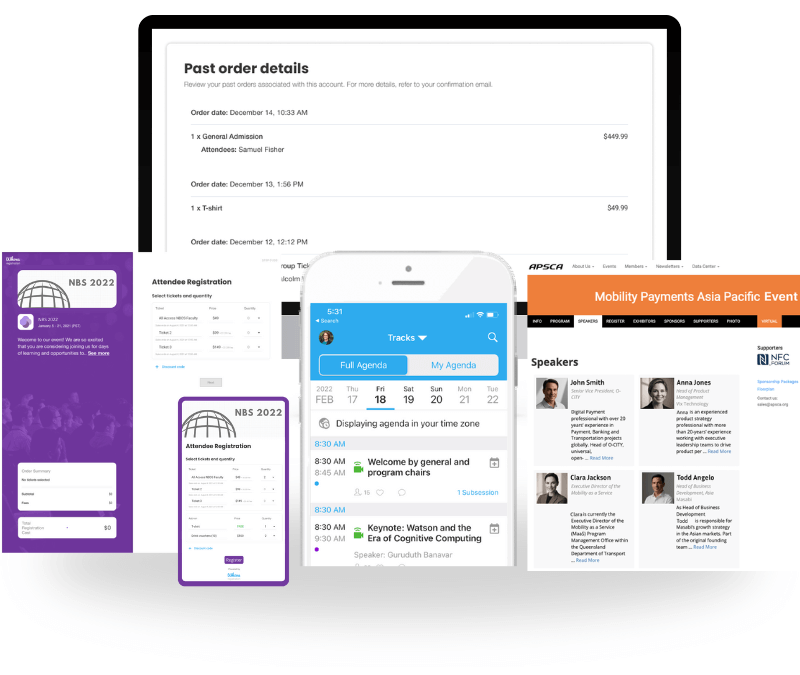
Quick Verdict: An all-in-one event management platform that streamlines registration with built-in check-in, attendee management, speaker management, event webpages, name badges and engagement tools.
Whova vs Swoogo
Whova connects registration data directly to attendee profiles and updates information in real time. Planners don’t need to export lists or manually sync data between different tools, which helps keep attendee information consistent across the event experience.
Swoogo focuses more on customizable registration forms and branded event websites, while Whova emphasizes end-to-end event operations, on-site execution, and community engagement for conferences, summits, and association events. This approach reduces manual coordination and supports both in-person and hybrid event formats.
Key features:
- Comprehensive Event Management: Whova’s comprehensive event management system covers all aspects of event planning, from ticketing to post-event surveys. This ensures that no detail is overlooked, providing a sense of security for event planners.
- Reliable Event App: Whova’s app has been praised with its high rating, making it a solid and robust choice for attendees and organizers.
- Advanced Networking Tools: Features like virtual business cards, leaderboards and multiple gamification options allows increased attendee interaction.
- Robust Analytics: Organizers can track attendee engagement, ticket sales, and session popularity through comprehensive reporting tools.
Pros
The platform streamlines the full event cycle with integrated engagement and networking, which can significantly reduce administrative workload.
Cons
Template customization options may feel more structured, which can limit teams that need highly unconventional event website designs.
Pricing
Pricing follows a custom per-event model based on event size and required features.

2. Cvent
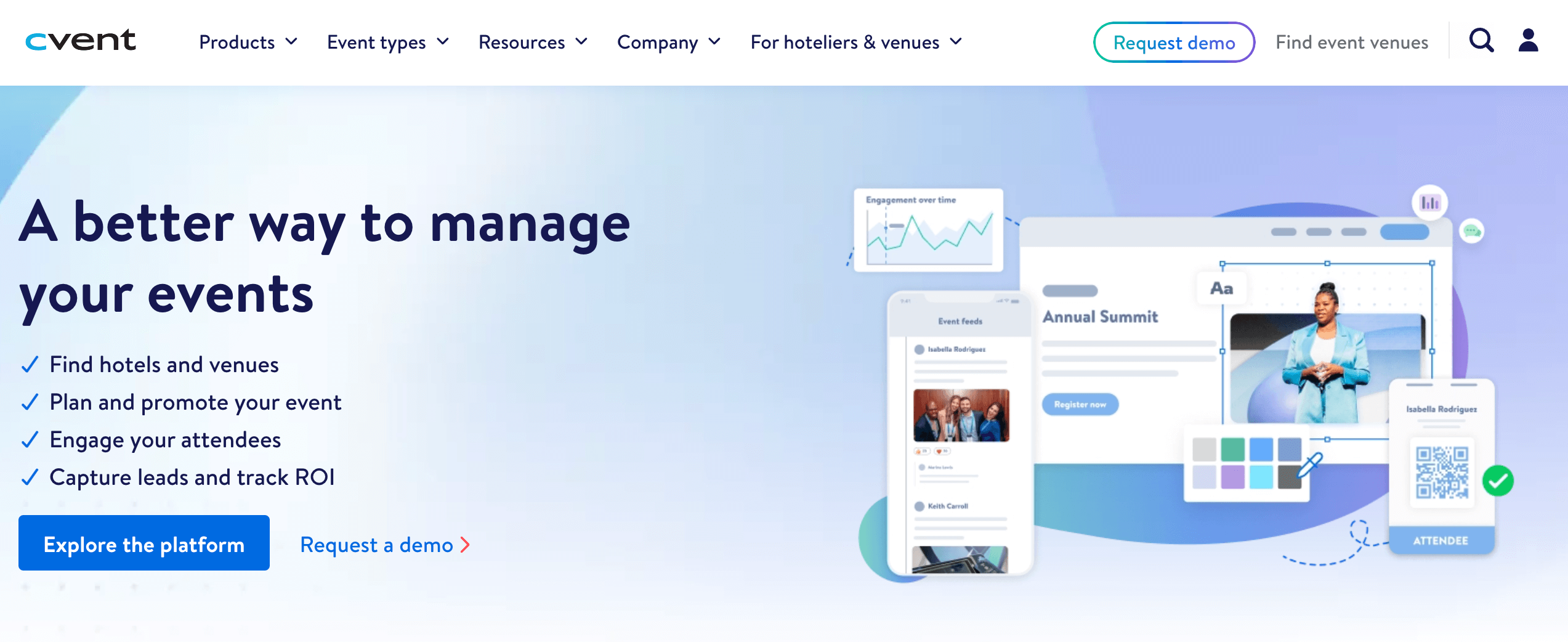
Image credit to Cvent
Quick Verdict: An enterprise event management platform designed to support large-scale conferences, complex logistics, and global event operations.
Cvent vs Swoogo
Cvent is able to support more advanced use cases such as venue sourcing, hotel room management, and large-scale event logistics that go beyond standard registration workflows. Organizations often use it when they need centralized control over all logistics such as travel, accommodation, procurement, and enterprise-level event operations.
Swoogo focuses more on flexible registration forms, branded event pages, and marketing-friendly event setup. In contrast, Cvent emphasizes end-to-end event management for larger organizations that need deeper operational control.
Key features:
- Global venue and supplier sourcing.
- Comprehensive tools for on-site event management and logistics such as check-in and badging.
- Strong vendor communication tools with potential venues and service providers.
- Comprehensive attendee engagement with features like live polling, surveys, and appointment scheduling.
Pros
Cvent supports large-scale, multi-location events and provides strong capabilities for data management, security, and operational coordination across different event logistical teams.
Cons
Cvent requires more setup time and training compared to other event platforms with teams often having dedicated members to manage those configurations effectively.
Pricing
Cvent provides annual licensing with pricing based on contract scope, usage, and selected modules.
3. EventMobi
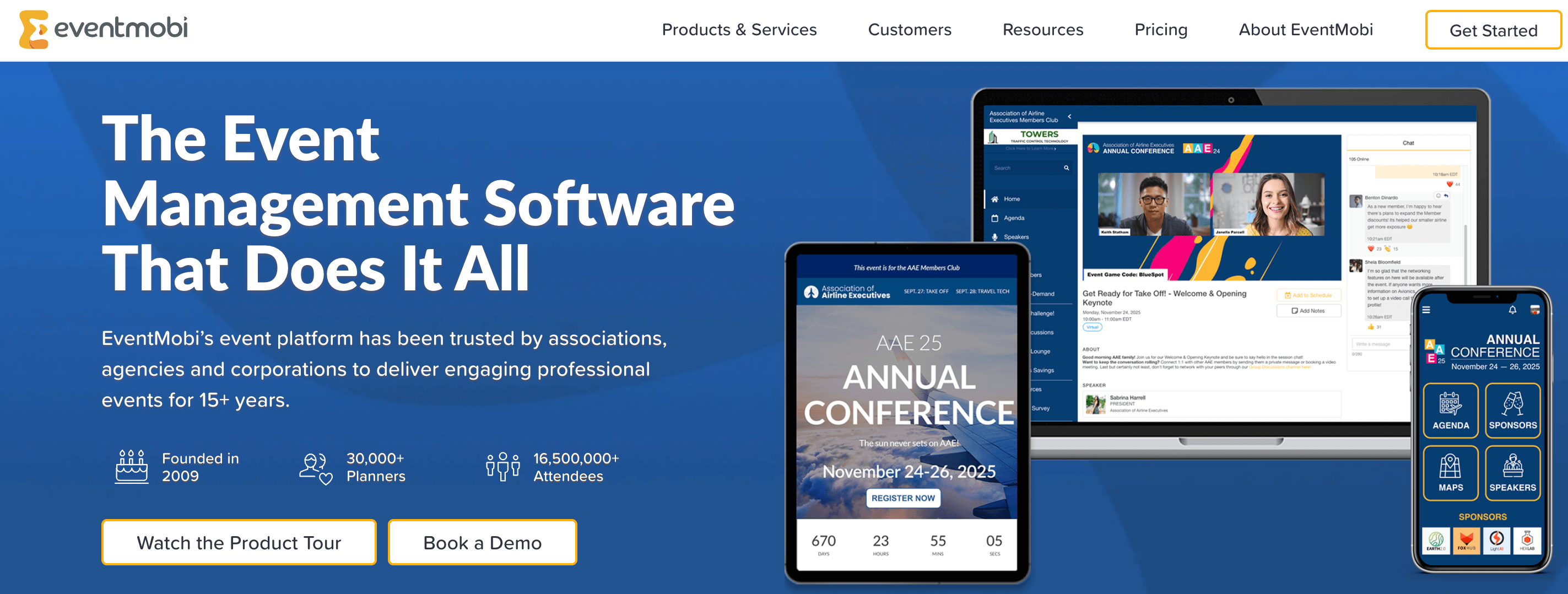
Image credit to EventMobi
Quick Verdict: An event management platform designed for associations, regional conferences, and recurring community events.
EventMobi vs Swoogo
Swoogo focuses more on customizable web-based registration and front-end event page design, while EventMobi emphasizes app-driven live engagement and interactive attendee experiences such as gamification and networking tools. These tools make it a better fit for associations and non-profits managing recurring or regional events.
Key Features:
- Customizable layouts and branding for event app.
- Interactive engagement features such as live polls, Q&A, and gamification.
- Marketing automation tools to create targeted marketing campaigns to boost attendance.
Pros
The platform offers tracking for on-site interactions between attendees which can help organizers optimize their future event experiences.
Cons
Smaller budget events might find less flexibility in pricing options.
Pricing
EventMobi provides both per-event pricing or multi-event annual pricing.
4. Bizzabo
Image credit to Bizzabo
Quick Verdict: A modern event management platform that combines event branding with attendee engagement and event analytics.
Bizzabo vs Swoogo
Bizzabo includes their smart event badges which allows contact exchange and session participation tracking. These additional insights into attendee engagement during in-person events can help organizers optimize their next event strategy.
Bizzabo focuses on helping B2B organizations manage branded events while measuring engagement and business impact across the event lifecycle. Swoogo places greater emphasis on flexible registration workflows and customizable event websites. Bizzabo is often a good fit for organizations that want to combine polished event experiences with robust analytics and engagement tools.
Key Features:
- Event branding and marketing tools such as drag and drop website builder.
- Flexible registration options with CRM integrations.
- Real-time attendee engagement tracking through Klik SmartBadges.
Pros
The platform offers tracking for on-site interactions between attendees which can help organizers optimize their future event experiences.
Cons
Smaller budget events might find less flexibility in pricing options.
Pricing
Bizzabo uses annual contract pricing alongside per-user pricing (with a minimum of 3 users).
5. vFairs
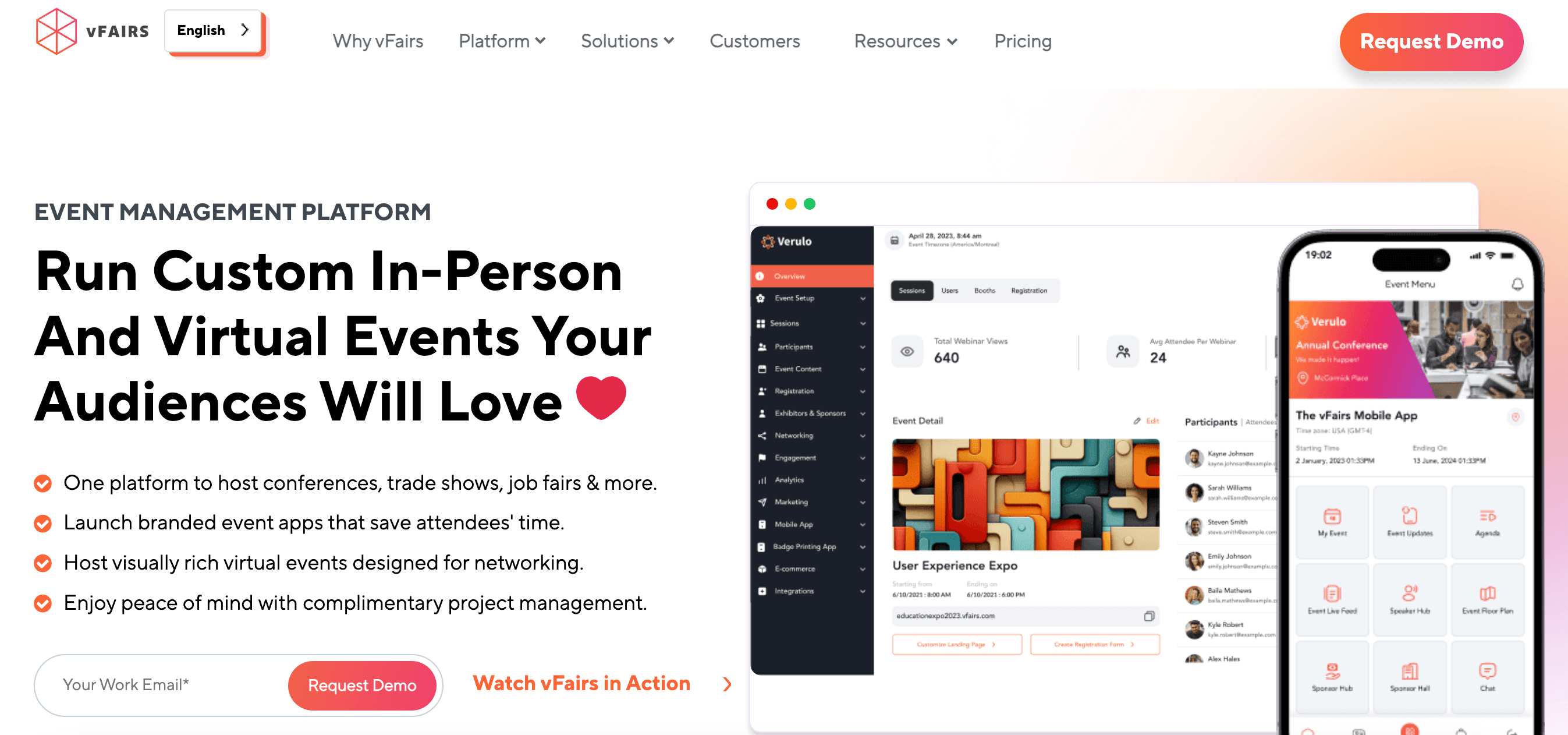
Image credit to vFairs
Quick Verdict: A virtual event platform built for immersive online conferences, trade shows, career fairs, and expos.
Vfairs vs Swoogo
vFairs creates interactive virtual environments that include exhibition halls, exhibitor booths, and networking spaces. These environments provide a more visual alternative to traditional event platforms.
While Swoogo focuses on registration, event websites, and attendee management, vFairs specializes in delivering virtual event experiences for organizations that host fully online or hybrid events. It works particularly well for virtual trade shows, job fairs, product launches, and large online conferences where online attendee interaction is a priority.
Key features:
- 3D virtual environments with custom virtual exhibitor booths, interactive attendee avatars, live chat and networking tools.
- Dedicated project management support throughout the event planning process.
- Customization options for registration, agenda, name badges and more.
Pros
The platform delivers engaging virtual experiences that elevate online attendee interaction and exhibitor engagement.
Cons
Building the customized virtual event environment typically requires additional implementation time and technical help compared with standard event platforms.
Pricing
vFairs offers custom per-event pricing based on the event’s size, scope, and required features.
Which Swoogo Alternative is Right for You?
If you organize large-scale events that involve venue sourcing, hotel room blocks, procurement, and compliance, Cvent provides the enterprise tools to manage those complex workflows. If your organization focuses on B2B events and values attendee engagement analytics, event marketing insights, and smart badge technology for in-person networking, Bizzabo is worth considering.
If you want to streamline event planning with registration, attendee management, mobile engagement, and on-site check-in in one platform, Whova offers an all-in-one solution that helps teams reduce manual tasks and coordinate conferences and association events more efficiently.
Conclusion
Selecting the right event management platform is a crucial step in ensuring a smooth and successful event. With so many options available, thorough research is essential to find a solution that aligns with your needs.
Choosing the wrong platform can lead to serious challenges, such as registration issues, poor attendee engagement, technical glitches, and limited customization options. These setbacks can result in frustrated guests, lower turnout, and added stress for your team.
By carefully evaluating different platforms and considering key features like scalability, integration, and user experience, you can set your event up for success from the start.
Swoogo is a popular event management platform, but there are also many other options. Make sure you do thorough research before choosing an event platform to use in order to ensure your event runs smoothly.
FAQ
Is there a more cost-effective choice than Swoogo for mid-market event teams?
Yes. Platforms offering per-event custom pricing models or modular tiers, such as Whova or EventMobi, frequently provide predictable prices than Swoogo’s rigid annual enterprise tier.
Which alternative platform provides the highest user adoption for native mobile engagement?
Whova consistently scores highest in app store rankings and user adoption because its community modules encourage discussion topics, meetups, and attendee matchmaking directly inside a native environment.
How does Swoogo compare to all-in-one software suites for complex conference management?
Swoogo predominantly specializes in its front-end registration and web page builder tools. On the contrary, all-in-one conference management softwares unify registration data with immediate on-site logistics, speaker centers, agenda personalization, name badge creation, attendee matchmaking and check-in natively.