
By: Whova Team | Last Updated: Feb 18, 2026

Planning an event for an association?
Association events are where members decide if their dues are worth it. A great event creates those “I’m so glad I came” moments; the unexpected conversation that leads to a partnership, the session that solves a nagging problem, the dinner where someone finally feels like they belong.
This association event planning guide walks you through the decisions that create those moments. Whether you’re planning your first conference or fine-tuning one you’ve run for a decade, you’ll find practical tactics for building events people actually want to attend.
Key Takeaways
- Association events are core to member engagement, revenue growth, and long-term retention.
- Successful association event planning balances strategic vision with practical execution, from logistics and marketing to technology and post-event follow-up.
- Event management software consolidates your registration, payments, and data into one system, giving your team time back and better visibility into what’s working.
Why Events Are Important for Associations?
Events are how associations prove their value. They generate revenue, drive retention, create networking opportunities, and deliver professional development that members can’t get anywhere else.
Events Drive Engagement
Events give members something newsletters and webinars can’t: actual face time with their professional community. Research from Wicket found that 97% of associations organize events, and every single one of them tracks conference attendance as a key engagement metric.
Events Generate Revenue and Build Connections
Events are around 29% of association revenue on average, including registration fees, sponsorships, and exhibitor sales. But there’s more to it than dollars. For professional and trade associations, 67% of members say networking is the main reason they joined, and that’s hard to replicate over Zoom or in a newsletter.
Events Deliver Professional Development
Whether through keynote presentations, breakout sessions, or informal peer-to-peer learning, events offer concentrated knowledge-sharing that members struggle to find elsewhere. Associations are uniquely positioned to deliver this education because they understand the specific challenges and opportunities within their industry.
Events Strengthen Member Retention
Lack of engagement is a top reason members don’t renew. Events give people a reason to show up and turn membership from a line item on a budget into something worth participating in. They’re where members meet the colleagues who become collaborators, get answers to problems they’re stuck on, and remember why they joined in the first place.
How To Plan an Event for Your Association
Successful association event planning requires balancing multiple priorities at once. You need to deliver value to attendees while managing budgets, timelines, and operational details.
The process involves:
- Strategic planning that lines up with your mission and financial goals
- Logistics and execution, from finding venues to managing speakers
- Member engagement through networking and interactive sessions
- Marketing and promotion across multiple channels
- Technology and support systems
- Post-event follow-up to keep the momentum going
Missing any one of these components can derail an otherwise solid event, which is why experienced planners treat them as interconnected rather than isolated tasks.
Strategic Planning
Figure out what you’re trying to accomplish, how much you can spend, and what kind of event makes sense before you do anything else. It sounds obvious, but most planning headaches come from skipping this step and trying to fix it later.
Align Events with Your Mission
If the event doesn’t connect to what your association does, members won’t show up. They can tell when something’s filler. Ask yourself: Does this move us forward, or are we just adding another date to the calendar because we think we should?
Define Specific Objectives
Choose one primary goal: increase member engagement, generate non-dues revenue, deliver professional development, or strengthen industry visibility. Each goal demands different decisions about format, content, and budget. For instance, a networking event requires different planning than a certification workshop.
Establish Financial Goals
Decide whether this event should be revenue-neutral, profitable, or subsidized as a member benefit. This determines your pricing structure and sponsorship approach. Then calculate your break-even point early so you can make informed trade-offs between quality and cost.
Choose the Right Format
Match the format to what you’re trying to do and what you can afford. In-person events are great for networking, but they’re expensive and you’ll lose people who can’t travel. Virtual events are cheaper and easier to attend, but you need a plan to keep the energy up when everyone’s on mute. Hybrid gives you both, but only if you put in the work to make remote attendees feel like they’re part of the action.
Logistics and Execution
Strategy only gets you so far. At some point, someone has to book the room, wrangle the speakers, and make sure the AV works.
Secure the Right Venue
Start looking six to twelve months out, especially if you’re planning during busy seasons. Think about capacity, how easy it is to get parking, and whether the space fits the vibe you’re going for. A formal conference needs a different setup than a casual mixer. And go see it in person before you sign anything; you need to get a feel for the acoustics, the flow, and how people will move through the space.
Negotiate Contracts Carefully
Before you sign anything, read every word. Venue contracts, in particular, can bind you to financial obligations, making it crucial to grasp the consequences of any changes. Be sure to scrutinize cancellation policies, payment timelines, minimum spending on food and drink, and the repercussions of lower-than-expected attendance. A good piece of advice: negotiate attrition clauses to allow for adjustments if registration numbers fluctuate.
Manage Speakers Proactively
Speaker management needs to well-planned and executed proactively. Reach out to speakers at least three months before the event. Be explicit about what you need from them: the duration of their talk, how they should present it, any audio-visual requirements, and whether you’ll be covering travel costs. The more information you provide upfront, the smoother things will go down the line.
Member Engagement
People don’t show up to events to meet or learn something useful. Here is how to make that happen.
Design Networking Opportunities Intentionally

Create discussion groups and topics for easier networking
Design structured networking sessions with clear formats: speed networking rounds, topic-based discussion tables, or facilitated introductions based on member interests or roles. Give attendees a reason to talk to each other beyond awkward small talk. For example, icebreaker questions, shared challenges, or guided conversations help people move past superficial exchanges.
Facilitate Roundtable Discussions
Pick topics based on what members are asking about or what’s happening in the industry, then keep groups small—eight to twelve people per table works well. Put a moderator at each table who can guide things, ask follow-up questions, and make sure the quiet people get a turn. Give everyone a clear question to start with, then let the conversation go where it needs to go.
Create Interactive Sessions
Build sessions around participation: workshops where people solve real problems together, case studies they can dig into, panels where the audience votes on questions, and demonstrations they can try themselves. The more they’re doing, the more engaged they’ll be.
Build in Informal Connection Time
Don’t forget to schedule breaks, meals, and social hours with enough time for conversations to develop naturally. Rushed transitions between sessions kill momentum. Members often report that hallway conversations and informal dinners delivered as much value as formal programming, so treat unstructured time as a feature, not filler.
Marketing and Promotion
Effective promotion requires reaching your audience through multiple channels with consistent messaging that drives registration.
Leverage Your Association Website
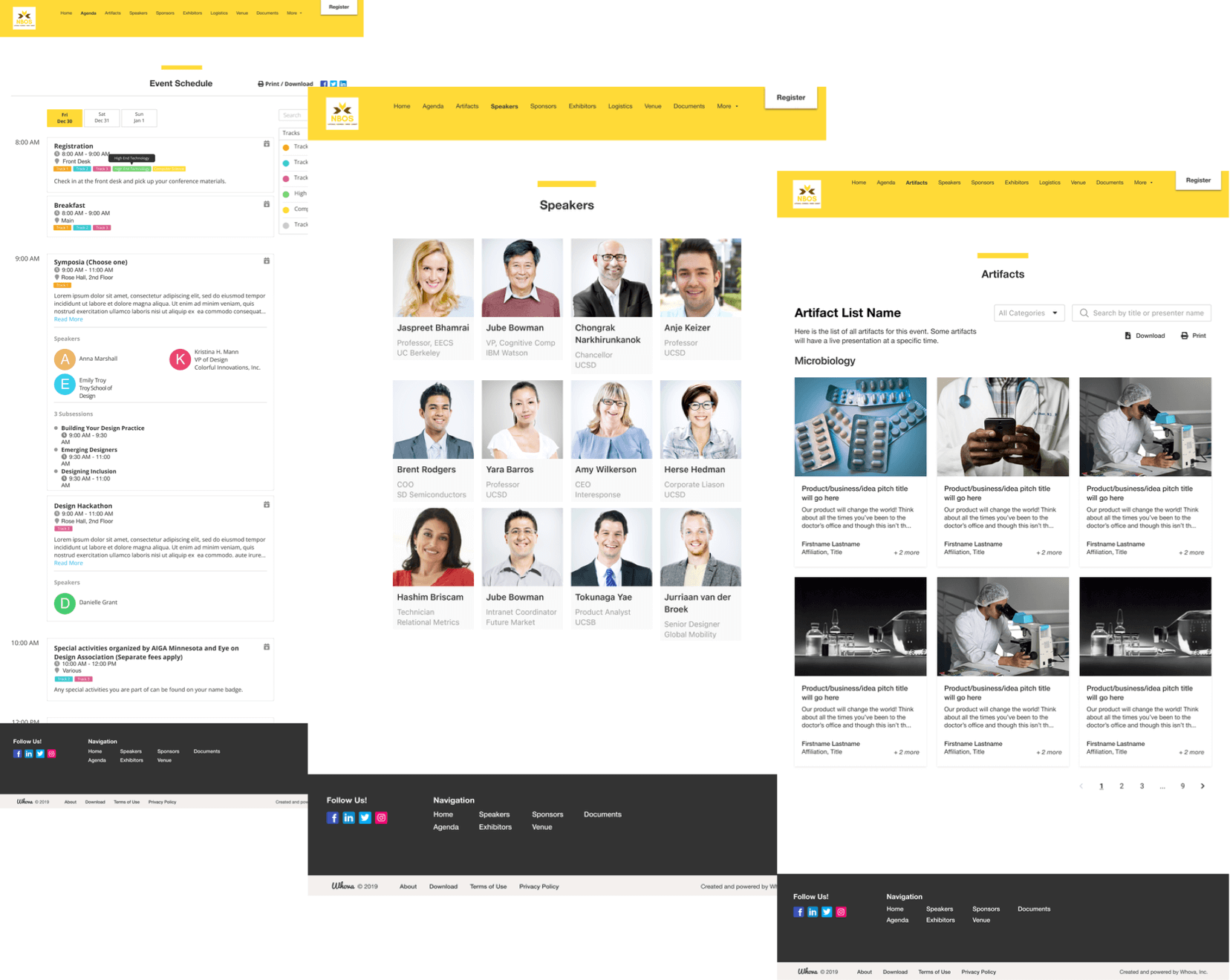
Leverage your event data to construct your dedicated event page
Your members are checking your website regularly, so start your promotion there. Build out a dedicated event page with the date, location, speakers, registration process, and pricing. As details get confirmed, you’ll need to keep the page current—and this is where event management software makes your life easier.
Instead of manually updating the same information across multiple platforms, the software syncs everything to your website automatically. Embedded Whova’s agenda and speakers widgets instantly update whenever there are changes.
Use Social Media Strategically
Think about what each platform does best. LinkedIn is where professional associations should lean in. Share speaker announcements, session topics, and early bird deadlines there.
Facebook and Instagram work well for building momentum with behind-the-scenes content, venue photos, or testimonials from people who attended last year. Twitter (X) is good for real-time updates and event hashtags people can follow during the conference.
Post regularly in the weeks before the event, but mix up what you’re saying so it doesn’t feel like you’re just spamming the same registration link.
Send Targeted Email Campaigns
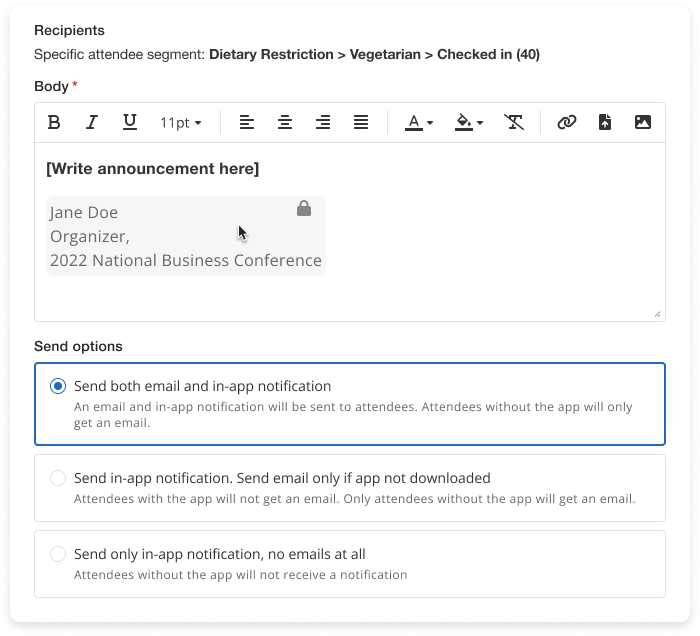
Send targeted emails and announcements based on different needs and segments
Not everyone needs the same message. New members don’t know what your annual conference looks like yet. Your regulars are just waiting to hear who’s speaking this year. Instead of blasting one announcement and calling it done, build a series over a few weeks: save the date, early bird pricing, speaker highlights, final reminder before registration closes.
Additionally, event registration software like Whova helps you segment by ticket type or specific member information so you can send personalized announcements. You won’t be bouncing between your email platform and your ticketing system. Everything stays in one place.
Promote Across Multiple Channels
Relying on one channel limits your reach. Members consume information differently, so meet them where they are. Combine website updates, social posts, email campaigns, and even direct outreach from board members or committee chairs to maximize visibility.
Technology and Support
Always choose tools that match your team’s capabilities and your event’s needs.
Select Event Management Software Wisely
Your event software needs to handle the full registration process, from payments to check-in to reporting, without forcing you to patch together multiple tools. Look for platforms that integrate with your association management system. Member data should sync automatically. Whova, for example, integrates with systems like iMIS, WildApricot, Glue Up, and more.
Before you commit, test the registration flow yourself. Can someone complete it in under three minutes on their phone? Is pricing clear? You also want real-time reporting so you can see what’s happening as registrations come in, not two days later when you finally export a spreadsheet.
Plan AV and Technical Requirements Early
Go through your agenda session by session and list out what each one needs. A panel discussion might only need microphones and a projector, but a keynote requires stage lighting, confidence monitors, wireless clickers, and recording equipment. Ask your venue which equipment is included in the rental and what you’ll pay extra for. Find out about load-in times, outlet locations, and whether union labor is required for setup.
Decide When to Hire Professionals
Some technical aspects require specialists. If your event involves live streaming, broadcast-quality recording, simultaneous interpretation, or multi-room AV coordination, bring in professionals who handle these regularly. For simpler setups like single-room events with PowerPoint presentations and basic audio, venue staff can usually handle what you need.
Post-Event Action
What you do after the event matters as much as the event itself. Follow up quickly or you’ll lose the momentum you just spent months building.
Send Thank You Messages Immediately
Get thank you emails out within 24 hours of the event wrapping up. Acknowledge people for coming, highlight a few key moments, and remind them what they got out of it. Personalize where you can by segmenting messages for speakers, sponsors, volunteers, and attendees. When people feel seen, they’re more likely to come back next time.
Deploy Post-Event Surveys Quickly
Send out your survey within two to three days while everything’s still fresh. Ask specific questions: which sessions were most useful, what would they change, and would they tell a colleague to attend. If response rates are low, offer something small in return—early access to presentation slides or a discount on next year’s registration usually helps.
Share Event Highlights
Put photos, session recordings, or key takeaways on your website and social media. This keeps the event alive a bit longer and gives something to members who couldn’t make it. Tag people in photos, quote speakers, share moments that show off your community. When members see themselves featured, they feel noticed and tend to stay more engaged.
Use Data to Improve
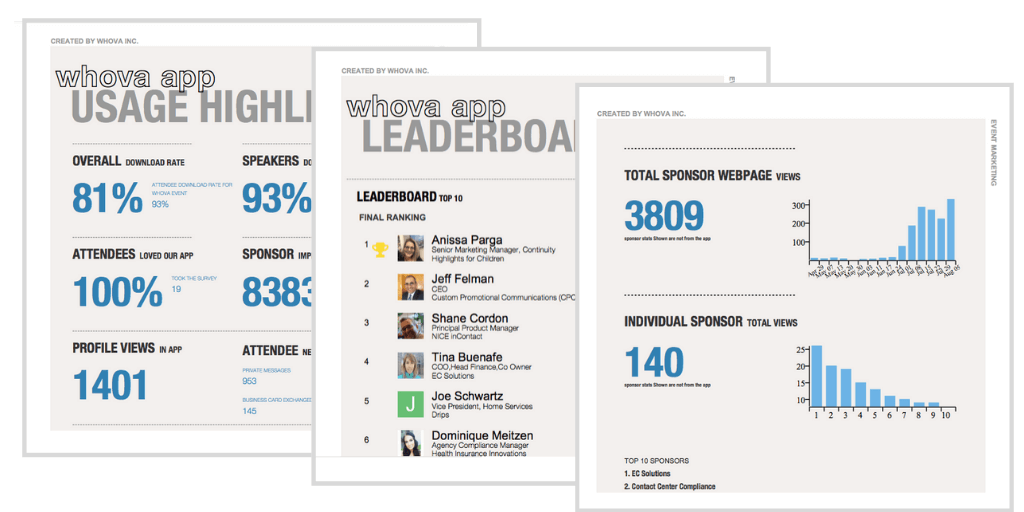
Use real event data to create reports that highlight the most important achievements
After the event wraps, sit down with your registration numbers, session attendance, survey responses, and financials. Compare them to what you were aiming for at the start and figure out what worked and what didn’t.
Whova can generate a post-event report that pulls all of this together (registration data, attendee engagement, marketing effectiveness) so you can share it with stakeholders without building it from scratch. Write down what you learned while you still remember, so next time you’re not repeating the same mistakes or forgetting what went well.
How An Event Management Software Can Help Associations
Event management software consolidates the entire planning process into one system. Instead of juggling spreadsheets, manual payment tracking, and disconnected communication tools, you handle everything from a single dashboard.
Streamline Registration and Payments
You can create multiple ticket types like early bird pricing, member versus non-member rates, VIP packages, and workshop add-ons through an integrated system. Attendees select their options, pay securely online, and receive instant confirmation emails.
The software tracks every transaction automatically, eliminating reconciliation headaches and payment errors. You’ll watch real-time revenue and registration numbers climb instead of waiting days for payment processors to send reports.
Build and Display Your Agenda
Build your full event schedule within the platform, then embed it on your association website using widgets. Members see session times, speaker names, room locations, and descriptions. Update your event data once and it refreshes everywhere.
Manage Speakers Efficiently
Platforms with dedicated Speaker Centers automatically generate speaker webpages, build schedules, share presentation upload links, and send reminders without you having to manually herd everyone.
Leverage Built-In Marketing Tools
Utilize the built-in marketing tools at your disposal. Get started with ready-made email templates. These are perfect for promoting your event, from “save the date” notices to early bird reminders, speaker announcements, and final registration calls. You can then schedule your campaigns to coincide with key registration milestones, with attendee lists already integrated.
Centralize Attendee Data
Everything from registration specifics and session choices to dietary needs and check-in confirmations resides within your event database. This allows for badge creation that displays attendee details, streamlines on-site check-in procedures, and facilitates audience segmentation for more focused post-event communications.
Track Event Performance with Analytics
Real-time dashboards replace guesswork with actual data. See registration trends, revenue by ticket type, session attendance, and engagement metrics as they happen. This visibility lets you spot patterns early, like which sessions are filling up fast or which marketing channels are driving the most conversions, and adjust your strategy before it’s too late.
Easily Host Year-Round Micro Events
Beyond your big annual conference, you’re probably running smaller events throughout the year: webinars, chapter meetups, workshops, and networking sessions. Event management software for small events helps you easily manage registration, communications, and attendance for these without the full setup your main conference requires.
Why Event Software Matters Beyond AMS
Your association management system is good at tracking memberships, collecting dues, and managing your member database. What it’s not built for is event planning. That’s where dedicated event management software comes in. It gives you the tools you need to plan, promote, and run events without trying to make your AMS do something it was never designed to do.
Plan Your Next Association Event with Whova
You’ve got the strategy. You know what members need. Now you need a platform that executes without adding more administrative burden to your team. Whova gives associations the tools to turn this guide into action.
Schedule a demo and see how it works for your next event.
FAQs About Association Event Planning
What is an association event?
An association event is any gathering organized by a professional or trade association for its members. This includes conferences, workshops, networking mixers, and webinars. The purpose is to deliver value that strengthens engagement, advances your mission, and provides professional development or networking opportunities. Unlike corporate or public events, association events serve a specific membership base with shared professional interests.
What are key characteristics for planning an event for associations?
Association event planning has several defining characteristics:
- Events must align with your organization’s mission and address specific member needs
- Networking opportunities are prioritized because member connections drive retention
- Educational content focuses on industry-specific challenges, not generic topics
- Budgets balance revenue generation with delivering value to dues-paying members
- Volunteer coordination and sponsor management help offset costs
- Post-event follow-up maintains engagement between gatherings
- The focus is on strengthening relationships within a professional community